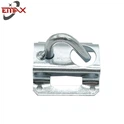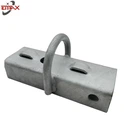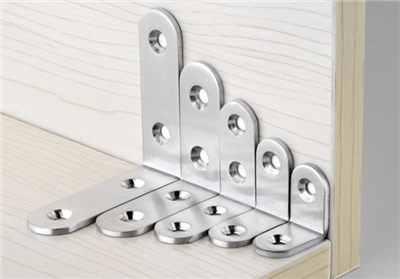
Stamping parts are parts manufactured by stamping process. The stamping process is a forming processing method that uses presses and molds to apply external force to materials such as plates, strips, pipes, and profiles to cause plastic deformation or separation to obtain the desired shape and size. This process is widely used in automobiles, electronics, home appliances, aerospace and other fields, and is favored for its efficiency, precision and ability to produce parts with complex shapes.
Classification of stamping parts
Stamping parts can be classified according to different criteria:
1. Classification according to process properties:
- Separation process parts: such as punching, blanking, cutting, etc., the main purpose is to separate the materials along a certain contour line.
- Forming process parts: such as bending, drawing, flanging, etc., the main purpose is to cause the material to plastically deform without breaking.
2. Classification by material:
- Metal stamping parts: Stamping parts made of metal materials such as steel, aluminum, copper, etc.
- Non-metal stamping parts: such as stamping parts made of plastics, composite materials, etc.
Characteristics of stamping parts
Stamping parts have the following salient features:
1. High precision and consistency: The dimensional accuracy of stamping parts is high, and parts in the same batch have uniform dimensions and good interchangeability.
2. Good surface quality: Since the surface of the material is not damaged during the stamping process, the surface quality of the stamped parts is good, with a smooth and beautiful appearance, which facilitates subsequent surface treatment.
3. High material utilization rate: The stamping process can produce the required parts with low material consumption, and has a high material utilization rate.
4. High strength and stiffness: After plastic deformation of stamping parts, the internal structure of the metal is improved, which increases the strength and stiffness of the parts.
Application of stamping parts
Stamping parts are widely used in various industries:
1. Automotive industry: body panels, chassis components, engine mounts, etc.
2. Electronics industry: mobile phone casings, computer cases, electronic component brackets, etc.
3. Home appliance industry: shells and internal structural parts of refrigerators, washing machines, air conditioners and other home appliances.
4. Aerospace: aircraft skins, aerospace engine components, etc.
Inspection of stamped parts
In order to ensure the quality of stamped parts, precise inspection using various measuring and inspection tools is required. The testing content includes dimensional accuracy, surface quality, mechanical properties, etc. Commonly used testing tools include calipers, micrometers, coordinate measuring machines, surface roughness meters, etc.
Development Trend of Stamping Parts
With the advancement of science and technology and the improvement of industrial automation, the manufacturing process of stamping parts is also constantly developing. In the future, stamping parts will develop in the following directions:
1. High precision and efficiency: Use advanced CNC technology and automated production lines to improve the manufacturing precision and production efficiency of stamping parts.
2. New material application: Develop and apply new high-performance materials, such as high-strength steel, aluminum alloys, composite materials, etc., to meet the needs of different fields.
3. Environmental protection and energy saving: Use green manufacturing technology and energy saving and emission reduction measures to reduce environmental pollution and energy consumption in the production process of stamping parts.
In short, stamping parts, as an important mechanical component, play an indispensable role in modern industry. With the continuous advancement of technology, the manufacturing process and application fields of stamping parts will become broader and more diverse.