


Quality products: We implement different test methods to check the conditions of products for the samples. Once it's done and checked, everything has reached the standard, then we would put into production immediately to ensure the lead time.
Wide range of products: We have rich experience and mature technology, so our products offered comes in more than 500 types. Our main production and processing are metal stamping parts, sheet metal parts, welding assembly parts, vehicle processing parts, fasteners and plastic parts.
Advanced equipment: Our maximum punch is 400T and we own several robot welding machines. Our stamping machine is from 5Ton to 400Ton(Our max punch 400Ton),we can stamp steel with 12-16mm thickness.
Professional team: Since the establishment of our factory for over 20 years, we have been absorbing lots of professionals and technicians committed to the development and continuous improvement of product quality.
What Is Stamping Parts
Stamping parts may change the sheet into an entirely new shape or puncture holes for the addition of more components. Because stamping is a general term, there are categories of stamping for identifying specific processes. These processes are piercing, punching, plastic forming, and blanking.

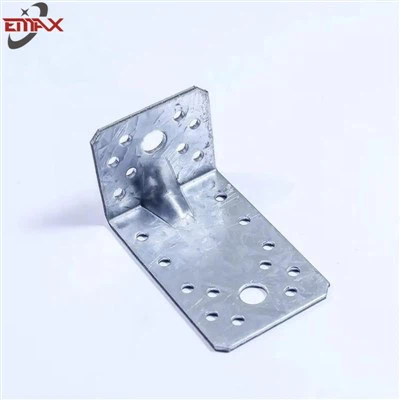


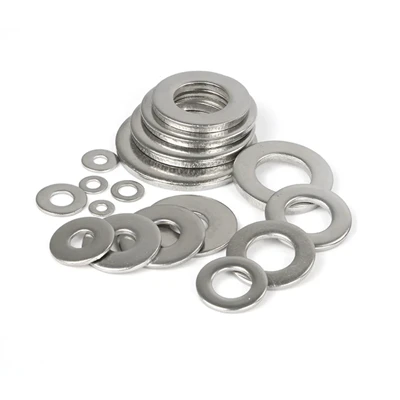
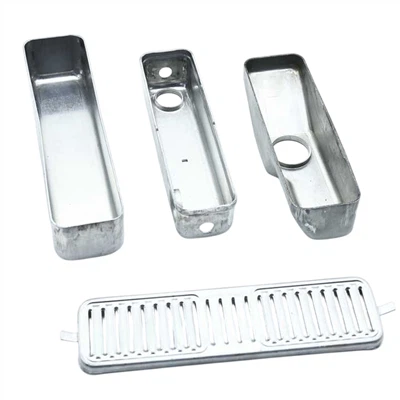
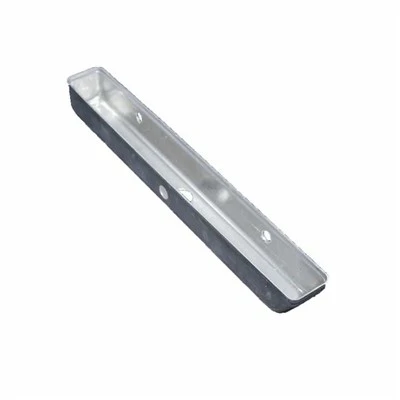
Product Categories
Latest Products
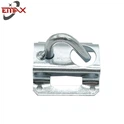


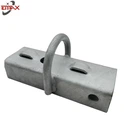


The Advantages of Stamping Parts
Material
Stamping parts can be made from a wide variety of materials, including aluminum, stainless steel, and copper. This flexibility allows for the production of parts with different properties, such as strength, conductivity, and corrosion resistance.
Precision
One notable advantage of stamping parts is their high precision. The use of specialized machines and tools allows for the creation of parts with tight tolerance levels and intricate designs. This precision also ensures that the final products have consistent dimensions, making them suitable for use in mass-produced machines and devices.
Shape and size
Stamping parts can be produced in a wide range of shapes and sizes, making them suitable for a variety of applications. Whether you need a simple flat piece or a complex three-dimensional part, stamping can deliver. Additionally, since stamping parts can be made in large quantities, they are often cheaper than other manufacturing methods, such as machining or casting.
Strength and durability
Stamping parts are highly durable and can withstand high pressures and temperatures, making them ideal for use in applications where strength and reliability are critical. Furthermore, the structural integrity of stamped parts is not compromised even when they undergo multiple manufacturing processes such as bending, coining, or embossing.
Cost-effective
Stamping is a cost-effective manufacturing method, which translates to lower production costs for companies. The process is highly automated, reducing labor costs and increasing efficiency. The high precision and durability of stamped parts also result in lower maintenance and replacement costs, reducing overall expenses for the end-user.
Complex geometries
With stamping, complex geometries can be achieved without sacrificing precision. This is particularly beneficial for industries such as aerospace and defense, where parts with intricate designs are required. Utilizes advanced stamping techniques and equipment to ensure that even the most complex geometries can be achieved with high accuracy.
Automation
Automation is a core aspect of stamping, making it a highly efficient manufacturing method. The use of automated machines and processes not only reduces labor costs but also results in consistent, high-quality parts. With 's advanced automation capabilities, you can be assured of reliable and cost-effective solutions for all your stamping needs.
Stamping Parts Applications


Appliances and electronics
Appliance and home electronics manufacturers use various durable stamping parts to lend advantages such as heat stability to their products. This includes precision parts like smoke detector battery terminals, garage door opener brackets, c-clips, and fire extinguisher valve caps.
Automotive and transportation
These industrial sectors rely on precision components that can be reliably and consistently reproduced. Stamping parts made of strong and lightweight metals are useful in manufacturing fittings, wheel hubs, taillight and engine caps, baffle cones, and rocket motor nozzles. These applications cut across different means of transportation, including air, water, vehicle, and rail transport.
Energy applications
Various types of metals are applicable in power generation components, such as copper tubing, enclosures for batteries or power supplies, and more.
Structural subassemblies
Metals can generate units assembled separately but designed to be used in larger manufactured products. Some subassemblies that use stamping parts include connector plates, frames, access panels, brackets, and mounting plates.
Telecommunications
The telecommunications industry uses metal-fabricated parts for a wide range of applications, including antennas, frames, chassis enclosures, and heat sinks. Metal provides the durability, tight tolerances, and weather resistance that this sector needs in its components.
How Stamping Parts Are Produced
Piercing involves creating pilot holes or openings in the metal coil. These holes are what keep the coil in place as it is fed through all of the subsequent stations. Without these pilot holes, the metal coil can slip during the rest of the process. Because of that, piercing is essential for producing parts that are accurate and uniform. It also contributes to the repeatability of the stamping process.
This part of the process can actually involve two or three different stations. Essentially, manufacturers use this phase to trim the outside profile of a part without detaching it from the carrier strip. This allows the part to be movded from one station to another.
The next stations involve forming. When producing metal stamping parts, the forming process is when the shape of the metal component is manipulated to achieve specific contours, bends, and features.
The forming step involves using a forming press or brake press and specialized tools. Common forming techniques include bending, embossing, and coining.
Again, this stage may involve two or three stations and allows for the addition any holes, slots, or shapes that may be needed to pierce the parts. This round of trimming comes right after forming because it enhances the accurate placement of those particular features.
The last series of stations often involve an idle station and the cut-off station. In the cut-off station, the final part is separated from the metal strip. From there, it goes onto a conveyor to exit the tool and press.
Tips on Maintaining and Caring for Various Types of Stamping Parts
Regular cleaning
Always be gentle when using a soft cloth or sponge. Harsh chemicals can damage finishes, so it's best to stick with mild cleaning solutions. If you're unsure, test a small, inconspicuous area first.
Polish sparingly
Not all hardware requires or benefits from polishing. When needed, use a polish appropriate for the material, but do so sparingly to avoid buildup.
Lubrication
For hardware with moving parts (like hinges or locks), applying a small amount of lubricant can keep them operating smoothly. Be sure to use a lubricant that's appropriate for the material and location (e.G., silicone-based lubricants for wet areas).
Climate considerations
In humid or coastal areas, be extra vigilant as moisture and salt can accelerate rust and corrosion. Regular cleaning and possibly more frequent lubrication may be necessary.
Types of Stamping for Stamped Parts
The different types of stamping parts utilize the diverse techniques that are applied to produce a finished part with high quality standards. There are three major types of stamping parts, and they are – progressive die stamping, deep draw stamping, and fourslide stamping.
Progressive die stamping
With progressive stamping (also referred to as prog die stamping), we move strip metal through a progressive stamping press, where it passes from one station to the next. Each station performs a specific function, including forming, punching, bending, and cutting the metal.
In most cases, progressive stamping requires the use of multiple stations or stages, especially when a project involves complex parts. Progressive stamping offers the advantages of a quick turnaround and the creation of repeated, uniform pieces.
Deep draw stamping
Deep drawing is a technique that uses a punch to feed a blank into a die. It works best for projects in which a customer needs extreme depths on the part shape. Generally, parts with sweeping and deep shapes are used in the automotive and aerospace industries. Deep drawing uses less raw material than other stamping processes.
Fourslide stamping
Fourslide stamping is a metalworking process that simplifies the creation of complex parts. It uses four tools that each bend the metal into the required shape simultaneously. While fourslide stamping doesn't create pieces with as much uniformity as progressive stamping, it makes changing or adjusting the design easier when a project requires many parts with different bends.

Steel: CRS steel like 1008, 1010, or 1018 is popular, general-purpose material is perfect for cold forming.
Stainless Steel: Such as 301, 304, and 316/316L. 301 stainless steel has excellent tensile strength, while 304 has more significant performance and corrosion resistance at higher temperatures. 316/316L steel features the best corrosion resistance of the three, though it also costs more.
Copper: Including C110, which is a powerful conductor and easily formable.
Brass: Brass 230 (85/15) and 260 (70/30) are highly formable and corrosion-resistant. These brass alloys are also known as red brass and yellow brass, respectively.
Here's a list of common stamping parts challenges:
Bursting: Ruptured surfaces may occur around holes or profiles due to worn punches or improper clearance, requiring tool maintenance or replacement.
Part fracture: Part fracture can result from negative tonnage, often called reverse tonnage, which occurs when a punch breaks through the metal during cutting, exerting a downward force on both the punch and press assembly.
Scrap web: Excess metal remnants between parts from worn or misaligned dies, requiring realignment and tool maintenance.
Burrs: Sharp raised edges caused by punch and die clearance, requiring deburring.

Our Factory
Our company is developing step by step led by Mr.ZHANGXIONG. We moved to our new plant last 2015, Supported by Robot Welding Machines and max 400Ton press. Our main production and processing are metal stamping parts, sheet metal parts, welding assembly parts, vehicle processing parts, fasteners and plastic parts. Our maximum punch is 400T and we own several robot welding machines. Since the establishment of our factory for over 20 years, we have been absorbing lots of professionals and technicians committed to the development and continuous improvement of product quality. We have rich experience and mature technology, so our products offered comes in more than 500 types. More than 90% are exported to European and American countries.

Our Certificate

Exhibition & Customer


FAQ
Q: What is the meaning of stamping parts?
Q: What is the concept of stamping?
Q: Why is stamping used?
Q: Where is stamping used?
Q: How to stamp metal parts?
Q: Is stamping parts hard?
Q: How to determine which classification of stamping parts should be used?
Q: How does stamping parts work?
Q: What are the benefits of stamping parts?
Precision: Accurate and consistent component production
Cost-efficiency: Economical for mass production
Speed: Rapid high-volume production rates
Versatility: Works with diverse metals and thicknesses
Automation: Suitable for automated production lines
Q: How does stamping parts compare to other metal forming processes?
Q: What is stamping parts used for?
Q: What is the difference between stamping parts and metal punching?
Q: What is the best thickness for metal stamping?
Q: What metal do you use for stamping parts?
Q: What is the difference between stamping parts and casting?
Q: Is stamping a form of forging?
Q: What material is used for stamping?
Q: Why is stamping parts good?
Q: What are the problems with stamping parts?
Q: What are the wrinkles in metal stamping?
We're well-known as one of the leading stamping parts manufacturers and suppliers in China for over 25 years. Please feel free to buy bulk customized stamping parts at competitive price from our factory. Good service and quality products are available.
exporter of stamping parts, din 1.2767 stamping parts, din 1 0037 stamping parts