


Quality products: We implement different test methods to check the conditions of products for the samples. Once it's done and checked, everything has reached the standard, then we would put into production immediately to ensure the lead time.
Wide range of products: We have rich experience and mature technology, so our products offered comes in more than 500 types. Our main production and processing are metal stamping parts, sheet metal parts, welding assembly parts, vehicle processing parts, fasteners and plastic parts.
Advanced equipment: Our maximum punch is 400T and we own several robot welding machines. Our stamping machine is from 5Ton to 400Ton(Our max punch 400Ton),we can stamp steel with 12-16mm thickness.
Professional team: Since the establishment of our factory for over 20 years, we have been absorbing lots of professionals and technicians committed to the development and continuous improvement of product quality.
Understanding Sheet Metal Fabrication Parts
Sheet metal fabrication parts are thin, flat pieces of metal that undergo various fabrication processes to achieve specific shapes and sizes. These processes primarily involve cutting, bending, and assembling the metal sheets to form the desired component. The metals commonly used for sheet metal parts include steel, aluminum, copper, brass, and stainless steel, each chosen for its unique properties and suitability for particular applications.


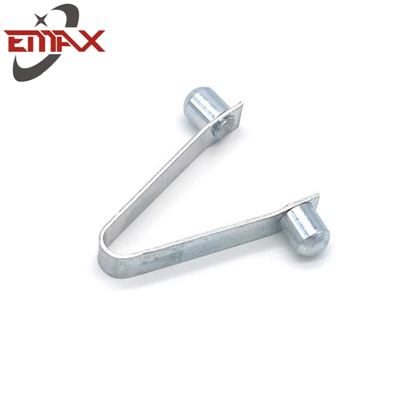


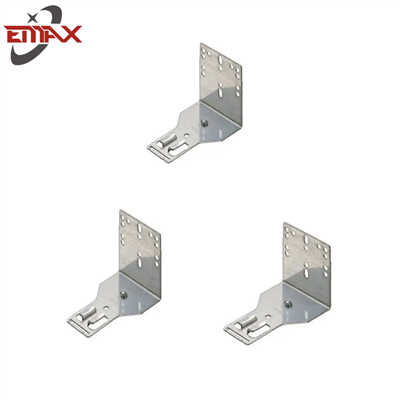
Product Categories
Latest Products




Applications of Sheet Metal Fabrication Parts
Sheet metal fabrication parts find application in a wide range of industries and products:
Automotive industry: From car bodies to exhaust systems, sheet metal fabrication parts are extensively used in the automotive sector due to their strength and lightweight characteristics.
Construction sector: Sheet metal fabrication parts are vital in the construction of buildings, bridges, and infrastructure due to their durability and ability to withstand harsh environmental conditions.
Electronics and appliances: Devices like computers, refrigerators, and air conditioners rely on sheet metal fabrication parts for their outer casings and internal components.
Aerospace industry: Sheet metal fabrication parts are crucial in aircraft manufacturing, providing aerodynamic and structural components.
Medical equipment: Many medical devices and equipment are crafted from sheet metal fabrication due to its hygienic properties and ease of cleaning.
Consumer goods: Various everyday items like metal furniture, kitchenware, and decorative pieces are made using sheet metal fabrication.

Sheetmetal mode: Using a specialized sheet metal fabrication environment.
Assembly mode: Using a top-down approach.
Conversion: Converting from a solid part.
Sheet metal fabrication parts are solid models that can be represented in either sheet metal fabrication form or as a flat model. These parts are of uniform thickness and can be modified by adding features. Features include walls, cuts, rips, bends, unbends, bend backs, forms, notches, punches, and relief. You can also create solid features, including chamfers, holes, rounds, and solid cuts, and apply patterns, copy, and mirror operations. You can also get information about the part, calculate its mass, and analyze the engineering.
Sheet metal fabrication parts have both driving and offset surfaces. The side (depth) surfaces are formed only after the model is successfully regenerated. The driving side is highlighted in green by default and the offset side is white, indicating thickness. When placing a feature, best practice is to select flat surfaces as references. When no flat surface is available, use an edge.
The Characteristics of Sheet Metal Fabrication Process
Sheet metal processing power density: Workpiece absorption sheet metal processing temperature rapidly rising and melting or vaporization, even if the melting point is high, high hardness and brittle materials can also be used sheet metal processing.
Sheet metal processing beam is easy to control: Easy to be combined with precision machinery, precision measurement technology and electronic computer, to achieve a high degree of automation and achieve high processing accuracy.
Sheet metal processing convenient and flexible: In the harsh environment or other people are difficult to approach the place, can be used for sheet metal processing robot.
Sheet metal processing and wide applicable scope: Sheet metal processing of beam divergence angle is less than 1 mm arc, spot diameter can be small to micron, time can be short to nanosecond and picosecond, at the same time, large sheet metal processing of continuous output power to kw to 10 kw level again, because a lot of welding method used in industrial production, according to the characteristics of the welding process can be divided into three categories.
Fusion welding: The common characteristic of this kind of welding method is that the joint of the welding parts is heated to the melting state by local heating method, and the welding parts are fused with each other and condensed together.Common arc welding, gas welding belongs to this category.
Pressure welding: The common characteristic of this kind of welding method is that, whether the welding is heated or not, certain pressure is applied to make the two bonding surfaces close contact, promote the nodular effect between atoms, so as to obtain the firm link of the two weldments.Resistance welding and friction welding belong to this category.
Brazing: It has similarities with fusion welding, but also can obtain a strong link, but there is an essential difference between the two.In this square method, the solder with a lower melting point than the solder is heated together with the solder, so that the solder melts, while the solder itself does not melt. The liquid solder is used to wet the solder, fill the gap of the joint, and diffuse with the solder to realize the combination with the solid metal to be welded, and the condensation is connected with each other.
Fusion welding: The common characteristic of this kind of welding method is that the joint of the welding parts is heated to the melting state by local heating method, and they fuse with each other and are combined with each other after condensation. Common ARC welding, gas welding belongs to this category.
Pressure welding: The common characteristic of this kind of welding method is that, whether the welding is heated or not, certain pressure is applied to make the two bonding surfaces close contact, promote the nodular effect between atoms, so as to obtain the firm link of the two weldments. Resistance welding and friction welding belong to this category.
Brazing: It has similarities with fusion welding, but also can obtain a strong link, but there is an essential difference between the two.In this square method, the solder with a lower melting point than the solder is heated together with the solder, so that the solder melts, while the solder itself does not melt. The liquid solder is used to wet the solder, fill the gap of the joint, and diffuse with the solder to realize the combination with the solid metal to be welded, and the condensation is connected with each other.
Materials Available for Sheet Metal Fabrication Parts


4130 Chromoly: Used to build roll cages in race cars, 4130 is a super strong high carbon steel.
6061 Aluminum: One of the most commonly used alloys of aluminum, 6061 is a good balance of strength and low cost.
5052 Aluminum: An excellent choice when bending aluminum is needed.
2024 Aluminum: Strong aluminum used a lot in aerospace for its fatigue resistance.
7075 Aluminum: The strongest aluminum we offer.
AR400/AR500: These two steels are known for their ability to resist abrasion. AR400/AR500 are used a lot in heavy digging equipment and gun targets.
Brass: Beautiful and functional, brass is used as a bushing material for its self-lubricating properties, in electrical applications for its electrical conductivity and in decorative applications for its appearance.
Mild Carbon Steel: An inexpensive workhorse material. Mild carbon steel is strong, bendable, weldable.
Copper: Similar to brass, copper has excellent electrical conductivity. It is also used in heat sinks for its thermal conductivity (even better than aluminum) and in decorative applications.
304 and 316 Stainless Steel: Known for their excellent corrosion resistance. 304 and 316 stainless steel are a good option in marine environments where even coated mild steel will eventually rust.
Grade 2 and 5 Titanium: The lightweight of aluminum, the strength of steel and the corrosion resistance of stainless. Used a lot in high end applications like aerospace and automotive racing.
1075 Spring Steel: Thin and springy! Used to make springs and light duty cutting edges.
G90 Steel: A thin carbon steel with a hot-dipped galvanized coating for excellent corrosion resistance. Useful for forming enclosures.
Benefits of Sheet Metal Fabrication Parts
Easy maintenance
As metal is an excellent conductor of heat, it helps keep sensitive electronics in the engine bay cool and prevents them from overheating. Metal parts are also resistant to damage from oil, fuels, and other chemicals meaning they require very little maintenance over their lifespan.
Suitable for complex designs
Metal materials can be easily shaped and formed into complex shapes for intricate designs that would not be possible with alternative materials.
Cost-effective and recyclable
In comparison to other materials, metal is often cheaper to work with as it requires fewer specialized tools, machines, and processes to create a finished part or component. Furthermore, many metals such as aluminum, steel, or iron can be recycled or upcycled for use in other parts, making them an environmentally friendly option for car owners.
Metal materials tend to have a longer lifespan than other types of material and are much more resistant to wear and tear from everyday use.
Methods to Prevent Corrosion of Sheet Metal Fabrication Parts
The rusting of iron can be prevented by greasing, painting, galvanizing, anodizing, or oiling the surface. These methods can be classified into the following categories:
Galvanization: Galvanized metal is coated with a thin layer of zinc to protect it against corrosion. The zinc oxidizes when it is exposed to air creating a protective coating on the metal surface.
Alloying: It is the method of improving the properties of a metal by mixing the metal with another metal or nonmetal. When iron is alloyed with chromium and nickel in stainless steel is obtained. Stainless steel does not rust at all.
Painting: Rusting of iron can be easily prevented by coating the surface with paint which protects iron from air and moisture.
Greasing/Oiling: When some grease oil is applied to the surface of an iron object, then air and moisture cannot come in contact with it, and hence rusting is prevented.
Our Factory
Our company is developing step by step led by Mr.ZHANGXIONG. We moved to our new plant last 2015, Supported by Robot Welding Machines and max 400Ton press. Our main production and processing are metal stamping parts, sheet metal parts, welding assembly parts, vehicle processing parts, fasteners and plastic parts. Our maximum punch is 400T and we own several robot welding machines. Since the establishment of our factory for over 20 years, we have been absorbing lots of professionals and technicians committed to the development and continuous improvement of product quality. We have rich experience and mature technology, so our products offered comes in more than 500 types. More than 90% are exported to European and American countries.

Our Certificate

Exhibition & Customer


FAQ
Q: What is the difference between sheet metal and fabrication?
Q: What do you mean by sheet metal fabrication?
Q: Is welding the same as sheet metal fabrication?
Q: What is meant by sheet metal?
Q: What are the characteristics of sheet metal?
Q: What are the characteristics ofsheet metal fabrication process?
Q: How are most sheet metal fabrication parts made?
Q: Why metal is the best material?
Q: Why is sheet metal fabrication parts so durable?
Q: How do you clean sheet metal fabrication parts parts?
Q: How to make sheet metal fabrication parts shiny again?
Q: What are 3 ways to protect sheet metal fabrication parts from corrosion?
Q: What are 3 ways to preserve sheet metal fabrication parts?
Q: How do you refresh sheet metal fabrication parts?
Q: How do you seal sheet metal fabrication parts so it doesn't rust?
Q: How are sheet metal fabrication parts machined?
Q: How to protect sheet metal fabrication parts from corrosion?
Q: What are metal parts made of?
Aluminum component turned on a lathe.
Magnesium thixomolded part before post-processing.
An aerospace component machined from copper.
Cylindrical designs are typically turned on a lathe.
Stainless steel gears before and after bead blasting.
Q: How do you connect sheet metal fabrication parts?
Different metal joining methods.
Riveting. One of the most popular metal joining methods for assembling metal parts is riveting.
Soldering. In soldering, a filler metal is used to join metal parts.
Brazing.
Adhesive.
Q: How are sheet metal fabrication parts cast?
We're well-known as one of the leading sheet metal fabrication manufacturers and suppliers in China for over 25 years. Please feel free to buy bulk customized sheet metal fabrication at competitive price from our factory. Good service and quality products are available.
sheet metal fabrication for collaborative projects, sheet metal fabrication for prototypes and small runs, sheet metal fabrication with tight tolerances