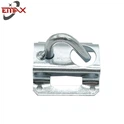
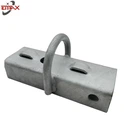
Furniture hardware refers to various metal or non-metal functional and connecting accessories used in furniture, including hinges, slides, handles, brackets, connectors, support mechanisms, etc. Although small in size, it plays an indispensable role in the structure, function, experience and life of furniture. High-quality furniture hardware is not only a guarantee of furniture performance, but also an important embodiment of modern home comfort and intelligence.
1. Structural connection and support: building a stable foundation
The stability of furniture first depends on scientific and reasonable structural connection, which is the important responsibility of hardware accessories. Various connectors (such as three-in-one connectors, screws, angle codes, hanging parts, etc.) combine various components into a solid whole through precise positioning and tight connection. Without the support of these accessories, furniture is prone to loosening, tilting, breaking and other safety hazards during use. Therefore, structural hardware is the core foundation for furniture to bear weight, resist deformation and maintain safe use.
2. The key to functional realization: making furniture "move"
Furniture hardware is the central component to realize the diversified functions of furniture. For example:
Slide rail system: ensures that drawers can be easily, smoothly and stably moved in and out;
Hinge system: controls the precise opening and closing of cabinet doors, and adjusts the gap and angle;
Lifter and folding mechanism: allows tables, beds, etc. to achieve space transformation and folding storage;
Sliding door track: realizes the flexible movement of space partitions such as cabinet doors and screens.
Hardware not only gives furniture dynamic capabilities, but also expands the possibility of furniture design and provides support for innovative furniture forms and functions.
3. Improve experience and comfort: focus on humanized details
Modern furniture hardware pays more and more attention to human-computer interaction and user experience. Ergonomic design concepts are widely used in hardware products, which are reflected in:
Buffer hinges and damping slide rails: realize silent opening and closing, anti-pinch and anti-collision;
Hidden installation design: improve the neatness of furniture appearance, easy to clean and maintain;
Adjustable structural parts: realize flexible adjustment of furniture height, angle, position, etc. to adapt to diverse usage needs.
The optimization of these details has greatly improved the comfort, convenience and safety of furniture.
4. Beauty and decoration: both functional and artistic
With the improvement of aesthetic requirements, the decorative function of hardware is becoming more and more prominent. Modern furniture hardware is more sophisticated in terms of material, shape, and process processing, such as:
High-end metal handles: diverse shapes, delicate touch, highlighting design taste;
Stainless steel and aluminum alloy feet: simple lines, enhancing the modern sense of furniture;
Electroplating, spraying and brushing process: enriching the surface texture, improving durability and visual effect.
These decorative hardware not only enhance the overall beauty of the furniture, but also play a finishing touch, and are an important part of the modern home style.
5. Extend service life: durability determines quality
High-quality hardware can effectively reduce functional damage caused by wear, corrosion, and fatigue. For example:
Rust-proof treatment (such as electroplating, phosphating, stainless steel materials): delay metal oxidation and adapt to humid environments;
High-strength hinges and tracks: durable, strong load-bearing capacity, reducing the frequency of maintenance and replacement;
Modular design: convenient replacement and maintenance, extending the life cycle of the entire furniture.
Therefore, the durability of hardware directly affects the overall service life and cost-effectiveness of furniture.
6. Promote the integration of intelligence and technology: towards future furniture
With the development of smart home, furniture hardware is also integrating electronic and automation technology to achieve functional upgrading and transformation. At present, smart hardware is widely used in:
Electric lifting system: supports automatic height adjustment of office desks, TV cabinets, etc.;
Smart opening and closing system: induction opening of cabinet doors and drawers, improving convenience and contactless experience;
Electronic locks: enhance storage security, applied to office furniture, smart wardrobes and other fields;
Integrated control interface: realize linkage control with smart home system.
These smart hardware turn traditional furniture from "static" to "dynamic", from "passive" to "active", providing unlimited possibilities for future smart life.
Conclusion
Although furniture hardware is small, it is an indispensable and important part of furniture design and use. From basic connection to intelligent drive, from structural stability to aesthetic expression, hardware gives furniture a soul, which directly determines the quality height and use experience of furniture. With the continuous evolution of lifestyle and technology, the role of furniture hardware will become more diverse, and its development will also lead the furniture industry towards a higher level of refinement, intelligence and personalization.