What is the Young's modulus of a wire rope thimble?
As a seasoned supplier of wire rope thimbles, I often encounter inquiries from clients regarding various technical aspects of our products. One question that frequently arises is about the Young's modulus of a wire rope thimble. In this blog, I aim to shed light on this topic, explaining what Young's modulus is, its significance for wire rope thimbles, and how it relates to the overall performance of these essential components.

Understanding Young's Modulus
Young's modulus, also known as the modulus of elasticity, is a fundamental concept in materials science and engineering. It is a measure of the stiffness of a material, specifically the ratio of stress (force per unit area) to strain (deformation per unit length) within the elastic limit of the material. In simpler terms, it tells us how much a material will stretch or compress under a given load before it permanently deforms.
Mathematically, Young's modulus (E) is defined as:
[ E = \frac{\sigma}{\epsilon} ]
where (\sigma) is the stress applied to the material and (\epsilon) is the resulting strain. The unit of Young's modulus is typically pascals (Pa) in the SI system, although other units such as gigapascals (GPa) are also commonly used.
The value of Young's modulus varies widely depending on the material. For example, materials like steel have a relatively high Young's modulus, indicating that they are stiff and resist deformation. On the other hand, materials like rubber have a very low Young's modulus, making them highly elastic and easily deformable.
Importance of Young's Modulus for Wire Rope Thimbles
Wire rope thimbles are critical components used in various applications, including lifting, rigging, and marine industries. They are designed to protect wire ropes from abrasion and sharp bends, ensuring the longevity and safety of the rope. The Young's modulus of a wire rope thimble plays a crucial role in its performance and functionality.
A high Young's modulus in a wire rope thimble means that the thimble is stiff and can withstand high loads without significant deformation. This is important because wire ropes are often subjected to heavy loads during operation, and any excessive deformation of the thimble can lead to premature wear and failure of the rope. A stiff thimble also helps to maintain the shape of the wire rope, preventing it from kinking or twisting, which can further compromise its strength and integrity.
Conversely, a low Young's modulus may indicate that the thimble is too flexible and may not provide adequate support to the wire rope. This can result in increased stress on the rope, leading to accelerated wear and reduced service life. Therefore, it is essential to select a wire rope thimble with an appropriate Young's modulus for the specific application to ensure optimal performance and safety.
Factors Affecting the Young's Modulus of Wire Rope Thimbles
The Young's modulus of a wire rope thimble is influenced by several factors, including the material composition, manufacturing process, and heat treatment.
- Material Composition: The type of material used to manufacture the wire rope thimble has a significant impact on its Young's modulus. Common materials for wire rope thimbles include steel, stainless steel, and aluminum. Steel thimbles generally have a higher Young's modulus compared to aluminum thimbles, making them more suitable for heavy-duty applications. Stainless steel thimbles offer a good balance of strength and corrosion resistance, with a Young's modulus similar to that of steel.
- Manufacturing Process: The manufacturing process can also affect the Young's modulus of the thimble. For example, thimbles that are forged or machined from solid stock tend to have a more uniform microstructure and higher Young's modulus compared to those that are cast. This is because forging and machining processes can refine the grain structure of the material, improving its mechanical properties.
- Heat Treatment: Heat treatment is often used to enhance the strength and hardness of wire rope thimbles. Different heat treatment processes, such as quenching and tempering, can have a significant impact on the Young's modulus of the thimble. For example, quenching can increase the hardness and strength of the material, but it may also reduce its ductility and Young's modulus. Tempering is then used to relieve the internal stresses and restore some of the ductility, resulting in a more balanced set of mechanical properties.
Measuring the Young's Modulus of Wire Rope Thimbles
Measuring the Young's modulus of a wire rope thimble typically involves conducting a tensile test. In a tensile test, a sample of the thimble is subjected to a gradually increasing tensile load until it reaches its elastic limit. The stress and strain are measured at various points during the test, and the Young's modulus is calculated using the formula mentioned earlier.
It is important to note that the Young's modulus measured in a laboratory setting may not exactly represent the behavior of the thimble in real-world applications. Factors such as surface finish, residual stresses, and environmental conditions can all affect the actual performance of the thimble. Therefore, it is essential to consider these factors when selecting a wire rope thimble for a specific application.
Related Products and Their Applications
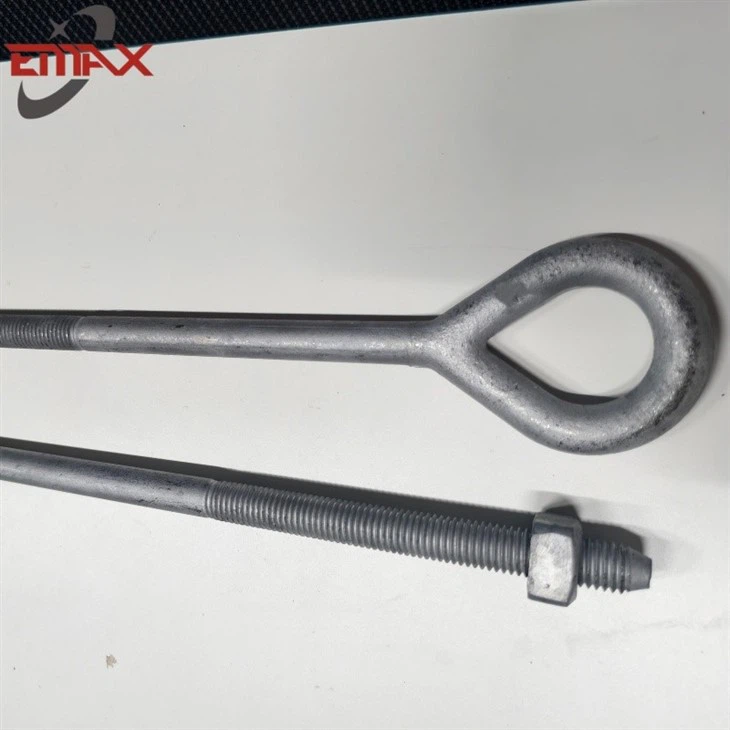
In addition to wire rope thimbles, our company also offers a wide range of related products that are commonly used in the same industries. Some of these products include Stainless Steel Grounding Pipe Clamp, Zinc Plated One Hole And Two Hole Strap, and Hot Selling Factory Price Steel Forged Power Accessories Oval Eye Bolt.
Stainless steel grounding pipe clamps are used to secure grounding pipes to various structures, providing a reliable electrical connection and preventing corrosion. Zinc plated one hole and two hole straps are commonly used for mounting and securing electrical equipment, offering excellent corrosion resistance and durability. Steel forged power accessories oval eye bolts are designed for heavy-duty lifting and rigging applications, providing a strong and reliable connection point.
These products, along with our wire rope thimbles, are all manufactured to the highest quality standards, ensuring optimal performance and safety in a wide range of applications.
Conclusion
In conclusion, the Young's modulus of a wire rope thimble is a crucial parameter that affects its performance and functionality. A high Young's modulus indicates a stiff and strong thimble that can withstand heavy loads without significant deformation, while a low Young's modulus may result in a more flexible thimble that may not provide adequate support to the wire rope.
When selecting a wire rope thimble, it is important to consider the specific application requirements, including the load capacity, environmental conditions, and compatibility with the wire rope. Our company offers a wide range of wire rope thimbles and related products, all manufactured to the highest quality standards. If you have any questions or need assistance in selecting the right product for your application, please do not hesitate to contact us. We are here to help you find the best solution for your needs and ensure the safety and efficiency of your operations.
References
- Callister, W. D., & Rethwisch, D. G. (2017). Materials Science and Engineering: An Introduction. Wiley.
- Ashby, M. F., & Jones, D. R. H. (2012). Engineering Materials 1: An Introduction to Properties, Applications and Design. Butterworth-Heinemann.
- Budynas, R. G., & Nisbett, J. K. (2011). Shigley's Mechanical Engineering Design. McGraw-Hill.