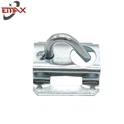
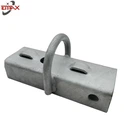
The application of metal stamping parts covers every corner of modern life, and can be roughly divided into:
1. Daily and household hardware stamping parts: daily necessities such as pots, pans, sinks, kettles, and household appliances such as washing machines, air conditioners, refrigerators, rice cookers, etc.;
2. Industrial hardware stamping parts: equipment chassis casings, vehicle sheet metal and engineering machinery stamping parts;
3. Stamping hardware for compact devices: instrumentation devices, connectors, etc.;
4. Special stamping hardware for aerospace ships and ships.
5. Stamping in the automotive industry. Mainly drawing. Stamping of parts for automobile and other industries. Mainly punching and shearing.
Characteristics of metal stamping parts
Compared with castings and forgings, precision stamping parts are thin, uniform, light and strong. Stamping can produce workpieces with ribs, ribs, undulations or flanges that are difficult to manufacture by other methods to improve their rigidity. Due to the use of precision molds, the workpiece accuracy can reach micron level, with high repeatability and consistent specifications, and holes, bosses, etc. can be punched out. The surface and intrinsic properties of stamping sheets have a great influence on the quality of stamped products. Hardware stamping processing has the following requirements for stamping materials:
1. The thickness of the stamping material is accurate and uniform;
2. The surface is smooth and clean, without spots, scars, scratches, surface cracks, etc.;
3. The yield strength is uniform and has no obvious directionality;
4. High uniform elongation;
5. Low yield-to-strength ratio and work hardenability.