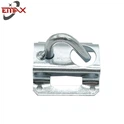
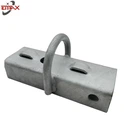
Metal stamping means:
Metal stamping is a metal manufacturing process. It is a forming processing method that uses a press and a mold to apply an external force to a sheet, strip, pipe, and profile to cause plastic deformation or separation to obtain a metal stamping part of the desired shape and size. Both metal stamping and forging belong to plastic processing (also called pressure processing), collectively referred to as forging. The blanks for metal stamping are mainly hot-rolled and cold-rolled steel sheets and strips.
Types of Metal Stamping Processes:
Common metal stamping process classification methods include process type, blank temperature, mold structure, etc. We describe these classification methods below.
1. According to the type of metal stamping process:
There are two main metal stamping processes, one is the process of separating the stamping parts from the blank (also known as stamping), and the other is the forming process of plastically deforming the blank to form a stamping part.
(1) Separation process (feeding):
It is to separate the stamping part. And blanks along a specific contour line in the metal stamping process, the cross-section meets specific quality requirements;
Commonly used separation processes (punching) include blanking, punching, trimming, tongue cutting, slicing, etc.
The punch and die of the punching die have sharp edges and corners, and there is a gap between the punch and die to ensure a neat cut and less burrs.
Punching and stamping are the same process, but both separate the scrap from the metal stamping. But their metal stampings are different:
When punching, the part that breaks away is a metal stamping part, and the rest of the surrounding area is a waste product;
Punching is for punching holes, the punched sheet is metal stamping, and the separated area is waste.
(2) Forming process:
In the case of not destroying the metal stamping blank, bending, rounding, twisting, deep drawing, thinning, deep drawing, flanging (hole flanging, outer edge flanging), contraction and expansion, undulations, curling, expansion Edge, spinning, shaping, leveling, embossing, extrusion (forward extrusion, reverse extrusion, composite extrusion) and other processes make it plastically deformed into metal stamping parts with specific shape, size and mechanical properties.
Bending is the use of bending dies to bend blanks into metal stampings of different shapes. It is divided into curved and curly.
Deep drawing is to use a deep drawing die to make a blank into a cylindrical metal stamping.
In addition to the above two distinct processes, other molding processes are also developed from the combination of these two processes.
2. According to the temperature of the blank during metal stamping:
(1) Cold metal stamping:
It refers to the manufacture of metal stampings from blanks at room temperature. Metal stamping parts of small thickness are produced by cold metal stamping.
Advantages and disadvantages of metal cold stamping:
advantage:
1. No heating required,
2. No scale,
3. Good surface quality,
4. Simple operation and low cost.
shortcoming:
1. There is a phenomenon of work hardening, which will cause the metal to lose its deformation ability in severe cases.
2. In most cases, cold metal stamping requires the use of metal stamping oil to improve the process.
3. The thickness of the blank is uniform, the fluctuation range is small, and the surface is smooth without spots or scratches.
(2) Hot metal stamping:
It is a metal stamping method in which metal is heated to a specific temperature range.
Advantages of hot metal stamping:
1. Eliminate internal stress and avoid work hardening,
2. Increase the plasticity of the material,
3. Reduce deformation resistance,
4. Reduce the power consumption of the device.
3. According to the complexity of the mold structure:
The mold is a tool that separates or deforms the blank. It consists of upper mold and lower mold. The die handle of the upper die is fixed on the slide block of the punch press and moves up and down with the slide block. Then place the lower die on the workbench of the punch press. According to the complexity of the mold structure, we can divide metal stamping into three types: simple metal stamping, continuous metal stamping and composite metal stamping.
(1) Simple metal stamping:
It is a process in which only one process (one of the blanking or forming process) is completed in one stroke of the punch press. Dies for simple metal stamping are called simple dies. We generally use simple metal stamping to produce metal stamping parts, and the process is relatively simple.
(2) Continuous metal stamping:
It means that in one stroke of the punching machine, the metal stamping parts are constantly moving on the mold, and multiple processes such as stamping, bending, forming, and deep drawing are completed during the movement. The molds owned by continuous metal stamping are called constant molds. The production efficiency is very high.
(3) Composite metal stamping:
It is to complete several stamping processes at the same time on the same part of the mold. The position of the metal stamping parts on the mold remains unchanged, but the shape will undergo plastic deformation with the combination of the combined mold. When the mold is completely closed, the metal stamping parts have completed the punching, bending, deep drawing and other processes. Once the mold is opened, the metal stamping is produced. Composite molds are suitable for metal stamping parts with large output and high precision.
Advantages and disadvantages of metal stamping:
Metal stamping is a metal processing technology that has incomparable advantages over casting and forging. We can use metal stamping to create stampings with ribs, ribs, corrugations or flanges. The above-mentioned stampings have a rigidity that is difficult to achieve for metal fittings produced by other manufacturing processes. The precision of metal stamping parts made by precision metal stamping technology can reach micron level. Cold stampings generally do not require or only require a small amount of cutting and can be used directly. The accuracy and surface condition of hot stamping parts are lower than cold stamping parts, but still better than castings and forgings, with less cutting.
Advantages of metal stamping:
(1) The production efficiency of metal stamping processing is high, the operation is convenient, and it is easy to realize mechanization and automation. Since metal stamping relies on molds and metal stamping equipment to complete the processing, the number of strokes of ordinary presses can reach dozens of times per minute, and high-speed pressure can reach hundreds or even thousands of times per minute. For a sum you might get a metal stamping.
(2) When metal stamping, the mold ensures the size and shape accuracy of the metal stamping parts, and generally does not damage the surface quality of the metal stamping parts, and the life of the mold is generally longer. Therefore, the quality of metal stamping parts is stable, the interchangeability is good, and it has the characteristics of "exactly the same".
(3) Metal stamping can process parts with a large size range and complex shapes, such as the second hand of a clock, as large as a car longitudinal beam, a car cover, etc., coupled with the cold deformation and hardening of the material during processing. Metal stamping, metal stamping Both strength and stiffness are high.
(4) Metal stamping generally does not produce chips and waste materials, has less consumables, and does not require other heating equipment. It is a material-saving and energy-saving processing method, and the cost of metal stamping parts is low.
Disadvantages of metal stamping:
1. Mold problem:
Mold manufacturing has high precision, long cycle, large investment, and many unforeseen problems. The experience requirements for mold technicians are very high, and it is a technology-intensive product. Therefore, only when the production batch of the product is large, the metal stamping processing method will be considered.
2. Security issues:
There are also some safety-related issues in metal stamping processing, which is also one of the characteristics of the industry and is determined by production equipment and processing methods. The production process needs to be equipped with better safety protection measures.
3. Substantive issues:
The development and research of high-strength steel cold forming is the direction of international efforts. At present, domestic and foreign research on thermoforming technology and equipment technology is relatively mature, but research on cold forming is almost blank.
Materials for metal stamping:
The quality of metal stamping materials is an important factor affecting the quality of parts and the life of molds. At present, stamping materials include not only low-carbon steel, but also stainless steel, aluminum and aluminum alloys, copper and copper alloys, titanium alloys, etc. Generally, the carbon content is less than 0.25%, and the tensile strength is less than 650N/mm². Both the surface quality and internal performance of the metal stamping plate have a great influence. The requirements for metal stamping materials are:
①The thickness of the plate needs to be accurate and uniform.
The specific thickness needs to be determined according to the requirements of metal stamping parts. If the sheet thickness is too large, it will increase the deformation force, causing the material to jam or even expand the mold; if the sheet is too thin, it will affect the quality of the finished product, and even crack during deep drawing.
②Smooth surface without spots, scars, scratches or surface cracks, because all surface defects will remain on the surface of finished metal stamping parts.
Crack defects in sheet metal may expand deep and wide during bending, deep drawing, forming, etc., resulting in waste products.
③ Uniform yield strength without obvious directionality.
Anisotropy (during deep drawing, flanging, bulging and other plastically deformed sheet metal stamping processes, due to the occurrence of anisotropic yield successively, the amount of plastic deformation is inconsistent, which will cause uneven deformation, inaccurate forming, resulting in defects or scrapped).
④ High uniform elongation.
In the tensile test, the elongation before the sample begins to appear thin neck is called the uniform elongation. During deep drawing, no area of the sheet can be deformed beyond a uniform extension of the material. Otherwise uneven deformation will result.
⑤ Low yield.
The ratio of the yield limit to the strength limit of a material is called the yield ratio. Low yield strength ratio can not only reduce deformation resistance, but also reduce the tendency of wrinkling during deep drawing, reduce the amount of springback after bending, and improve the accuracy of bending parts.
⑥ Low work hardening.
Work hardening after cold deformation will increase the deformation resistance of the material, making it difficult to continue deformation, so plates with low hardening index are generally used. However, materials with a high hardening index have good plastic deformation stability (the plastic deformation is relatively uniform), and local cracking is not easy to occur.
In actual production, process tests similar to metal stamping processes are usually used, such as deep drawing performance test, bulging performance test, etc. Test the metal stamping performance of materials to ensure the quality of finished products and high pass rate.
Hot rolled steel:
SPHC, SPHD, and SPHE are three hot-rolled steel grades (0.1% to 0.15% carbon content) commonly used in metal stamping, with stronger stretchability from left to right.
Cold rolled steel:
SPCC, SPCD, and SPCE are three cold-rolled steel grades (0.08% to 0.12% carbon content) commonly used in metal stamping, and they are more stretchable from left to right.
All of the above are low carbon steel.
Stainless steel:
The metal stamping performance of ferritic stainless steel is close to that of cold rolled steel plate. In the production process of this stainless steel plate, the texture structure can also be obtained by hot rolling, cold rolling, and annealing, so that the r value can reach about 1.2~1.8, so it has good drawing performance. However, its hardening index is about 0.2, and its elongation is about 0.25~0.3, which is lower than that of austenitic stainless steel, so its elongation and metal stamping performance are poor. Stainless steel metal stamping parts are very common in life.
Copper and Copper Alloys:
Copper and copper alloys can be divided into stretched copper and cast materials according to the manufacturing method; the representative characteristics of copper and copper alloys are as follows:
(1) Good thermal and electrical conductivity:
(2) Good machinability;
(3) Non-magnetic;
(4) Embrittlement does not occur at low temperatures;
(5) Corrosion resistance;
(6) good elasticity;
(7) Beautiful color tone, easy to tin;
Aluminum and aluminum alloys:
Aluminum and aluminum alloy materials can be divided into two categories: drawing materials and casting materials according to their manufacturing and forming processes. There are also differences in tensile materials between heat-treated alloys and non-heat-treated alloys, mainly because of the different methods of controlling the strength of the materials. Non-heat treatable alloys control the strength of the material by adjusting the degree of cold working. In general, the higher the degree of cold working, the higher the strength of the material. Heat-treated alloys are alloys that obtain the required strength through heat treatment methods such as quenching and aging treatment. Aluminum and aluminum alloy metal stamping parts have the following characteristics
(1) Beautiful appearance
(2) High strength to weight ratio
(3) Excellent processability
(4) Good comprehensiveness
(5) Corrosion resistance
(6) Low temperature characteristics
(7) Good electrical conductivity
(8) Good thermal conductivity
(9) Good reflective properties
(10) Non-magnetic
(11) Non-toxic
(12) recycling
Titanium alloy:
It is mainly used in scenes requiring light weight and high strength such as large equipment, aircraft, ships, and satellites. The processing technology is difficult and the cost is high. Therefore, when metal stamping titanium alloys, special metal stamping oil must be used to improve the process level.
Application of metal stamping parts:
Metal stamping parts can be seen everywhere in life. Some parts of the vehicle we took, some metal tableware used, and some brackets and links are stamped parts. In addition to daily life, metal stamping parts are also used in aerospace, military industry, machinery and other fields. If you want to know more about metal stamping parts or need to use metal stamping process to make some metal stamping parts, please contact us. We can provide you with high-quality metal stamping services.