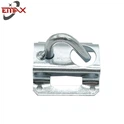
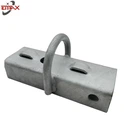
Crossarms are a common bracket on utility poles, which are widely used in the fields of electricity, communications, etc. The function of the crossarm is to support important equipment such as cables and cable trays on the utility poles and ensure their safe and stable operation. The following materials and accessories need to be prepared for the installation of crossarms.
- First, steel pipes are the main material of crossarms, and their main function is to support the equipment on the utility poles. Steel pipes should have certain strength and corrosion resistance to ensure that the crossarms can withstand certain weight and external forces.
- Second, U-shaped cards are important accessories for fixing cables or cable trays on crossarms. U-shaped cards should have appropriate sizes and specifications to ensure that cables or cable trays can be firmly fixed on crossarms.
- Third, bolts, nuts and screws are necessary fasteners when installing crossarms, and their function is to firmly connect equipment such as crossarms, wall panels and U-shaped cards together. Bolts, nuts and screws should have good corrosion resistance and load-bearing capacity.

When installing the crossarm, you need to first fix the wall plate on the pole, then pass the steel pipe through the wall plate and use bolts, nuts and screws to firmly fix it on the pole. When installing the U-shaped card on the steel pipe, you need to ensure that its size and specifications match the cable or cable tray to ensure that the equipment can be firmly fixed on the crossarm.
The installation of crossarms on poles is an indispensable task in the fields of electricity, communications, etc. By preparing sufficient materials and accessories and strictly following the operating procedures, we can ensure the quality and stability of the crossarm installation, providing strong support for the development of the fields of electricity, communications, etc. At the same time, the correct use and maintenance of crossarm equipment is also an important guarantee for enhancing the safety and stability of power and communication facilities.