How are die castings produced?
Clamping: Prepare and clamp the two halves of the mold.
Injection: Next, the molten metal is transferred to the injection chamber where it can be injected into the mold.
Cooling: The final shape of the casting is formed when the entire mold cavity is filled and the molten metal solidifies by cooling.
Ejection: The mold can be opened and the ejection device pushes the solid casting out of the mold cavity.
Trimming: During the cooling process, the material in the mold channels will solidify and adhere to the casting.

Metal - Die Cast
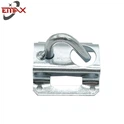
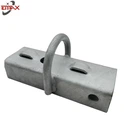
Die casting is a manufacturing process that produces metal parts with precise dimensions, sharp contours, and smooth or textured surfaces. The process works by forcing molten metal under high pressure into a reusable metal mold. The process is often described as the shortest distance between raw material and finished product. The term "die cast" is also used to describe finished parts.
This technology uses certain abrasive materials to pretreat the part surface. Used to prepare surfaces before parts are anodized, painted, and other operations. Shot blasting can significantly increase the durability and service life of parts.
Grinding: Provides die castings with a smooth surface, removes dividing lines or other defects, and prepares the surface for surface treatment.
Post-processing:
Black hard anodizing: This is the only anodizing method suitable for aluminum die castings. This treatment greatly improves the corrosion resistance of the surface. We highly recommend this finish for cast products for outdoor applications.
Powder spray coating: This surface treatment can not only be used as surface decoration, but also improve the corrosion resistance of the surface of cast products. The process protects even the toughest and roughest machinery from corrosion.
Spraying and baking: Spraying is usually used for surface protection and decoration, while baking is a more expensive process and is mainly used to decorate die-casting parts.
Mirror polished: Brushed is used for decoration of die-cast products. Polishing is actually a necessary process that needs to be done before any other surface treatment, including baking, plating or powder coating.