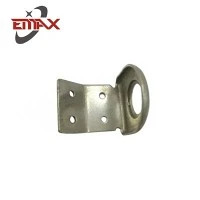
As a supplier of U Shape Spacers, one of the most frequently asked questions we encounter is about the maximum load capacity of these spacers. Understanding the maximum load capacity is crucial in ensuring the proper and safe use of U Shape Spacers in various applications.
What are U Shape Spacers?
U Shape Spacers are specialized components commonly used in a variety of industries, especially in electrical and telecommunications installations. They are designed in a U - shaped form, which provides a stable and secure way to hold and separate cables, pipes, or other objects. The U shape allows for easy insertion and removal of the items being spaced, while also providing a degree of flexibility in different installation scenarios.
Factors Affecting the Maximum Load Capacity
The maximum load capacity of U Shape Spacers is influenced by several key factors.


Material Composition
The material from which the U Shape Spacers are made plays a significant role in determining their load - bearing capacity. Common materials include plastics, metals, and composites.
- Plastics: Plastic U Shape Spacers are lightweight and corrosion - resistant. However, their load capacity is generally lower compared to metal spacers. For example, polypropylene spacers are suitable for light - duty applications where the load is relatively small, such as in some low - voltage electrical wiring installations.
- Metals: Metal spacers, such as stainless steel or aluminum, have higher load - bearing capabilities. Stainless steel spacers are known for their strength and durability, making them suitable for heavy - duty applications. They can withstand significant pressure and are often used in industrial settings where large cables or pipes need to be supported.
- Composites: Composite materials combine the advantages of different substances. They can offer a good balance between strength and weight. For instance, fiberglass - reinforced composites can have a relatively high load capacity while being more lightweight than pure metal spacers.
Design and Dimensions
The design and dimensions of the U Shape Spacers also impact their load capacity.
- Thickness: A thicker U Shape Spacer generally has a higher load capacity. A spacer with a greater wall thickness can distribute the load more evenly and resist deformation better. For example, a spacer with a 3 - millimeter wall thickness will typically be able to support more weight than one with a 1 - millimeter wall thickness.
- Width and Depth: The width and depth of the U - shaped opening also matter. A wider and deeper U shape can accommodate larger objects and may be able to handle a greater load. If the spacer is too narrow or shallow, it may not be able to hold the object securely, which can lead to premature failure under load.
Environmental Conditions
The environment in which the U Shape Spacers are used can affect their load capacity.
- Temperature: Extreme temperatures can cause materials to expand or contract. For example, in high - temperature environments, plastic spacers may become softer and lose some of their load - bearing capacity. On the other hand, in very cold temperatures, some materials may become brittle and more prone to cracking.
- Humidity and Corrosion: High humidity levels can lead to corrosion, especially in metal spacers. Corrosion weakens the material over time, reducing its load - bearing capacity. Therefore, in humid or corrosive environments, it is important to choose materials that are resistant to such conditions, such as stainless steel or corrosion - resistant plastics.
Determining the Maximum Load Capacity
To determine the maximum load capacity of U Shape Spacers, a combination of theoretical calculations and practical testing is often used.
Theoretical Calculations
Engineers use mathematical models based on the material properties and the design of the spacer. For example, for a metal spacer, they may use equations related to stress and strain to calculate the maximum load it can withstand before reaching its yield point. These calculations take into account factors such as the cross - sectional area of the spacer, the modulus of elasticity of the material, and the type of loading (e.g., static or dynamic).
Practical Testing
In addition to theoretical calculations, practical testing is essential. This involves subjecting the U Shape Spacers to increasing loads until they fail. The load at which failure occurs is recorded as the maximum load capacity. Testing can be done in a laboratory setting using specialized equipment, such as load cells and testing frames.
Applications and Load Requirements
The maximum load capacity requirements vary depending on the application.
Electrical Installations
In electrical installations, U Shape Spacers are used to separate and support cables. For low - voltage residential electrical wiring, the load requirements are relatively low. Plastic spacers with a load capacity of a few kilograms may be sufficient. However, in industrial electrical installations, where large - gauge cables are used, metal spacers with a much higher load capacity, perhaps in the range of tens or even hundreds of kilograms, may be required.
Telecommunications
In the telecommunications industry, U Shape Spacers are used to manage fiber optic cables. The Telecom C Type Fiber Optic Cable often requires careful spacing to prevent damage. The load capacity requirements for spacers in this application depend on the number and size of the cables. For a small - scale telecommunications installation, a spacer with a moderate load capacity may be adequate, while large - scale data centers or long - distance telecommunications networks may need spacers with a higher load capacity.
Pipe Systems
In pipe systems, U Shape Spacers are used to support and separate pipes. The load capacity requirements depend on the size and weight of the pipes, as well as the fluid or gas they carry. For small - diameter water pipes in a residential plumbing system, spacers with a relatively low load capacity can be used. However, for large - diameter industrial pipes carrying heavy fluids, such as oil or chemicals, spacers with a high load capacity are necessary.
Importance of Choosing the Right Load Capacity
Choosing the right load capacity for U Shape Spacers is of utmost importance.
- Safety: Using spacers with a load capacity that is too low can lead to failure, which can cause cables or pipes to fall, resulting in damage to the equipment and potential safety hazards. For example, in an electrical installation, if a spacer fails, it can cause short - circuits or other electrical problems.
- Long - term Performance: Spacers with the appropriate load capacity will ensure long - term performance. They can withstand the expected loads over an extended period without significant deformation or failure, reducing the need for frequent replacements.
Conclusion
In conclusion, the maximum load capacity of U Shape Spacers is determined by multiple factors, including material composition, design and dimensions, and environmental conditions. Understanding these factors is essential for choosing the right spacers for different applications. Whether you are working on an electrical installation, a telecommunications project, or a pipe system, selecting spacers with the appropriate load capacity will ensure the safety and long - term performance of your project.
If you are in need of U Shape Spacers or have questions about their load capacity and suitability for your specific application, we invite you to contact us for a detailed discussion. Our team of experts is ready to assist you in making the right choice. We also offer a wide range of related products such as S WALL BRACKET and Cutout Bracket With Back Plate And L - bracket to meet all your pole - line hardware needs.
References
- Engineering handbooks on materials science and structural analysis
- Industry standards for electrical, telecommunications, and plumbing installations