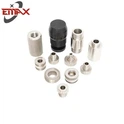
As a seasoned supplier of Clevises and Hangers, I often get asked about the load - bearing capacity of a typical clevis. Understanding this crucial aspect is not only essential for engineers and construction professionals but also for anyone involved in projects where clevises play a significant role. In this blog, I'll delve into the factors that determine the load - bearing capacity of a typical clevis and provide some insights based on my years of experience in the industry.
What is a Clevis?
Before we discuss the load - bearing capacity, let's briefly define what a clevis is. A clevis is a U - shaped piece of metal with holes at the open end through which a pin can be inserted. It is commonly used in various applications such as mechanical linkages, suspension systems, and electrical power fittings. Clevises are designed to provide a flexible connection between two components while allowing for some degree of movement.
Factors Affecting Load - Bearing Capacity
Material
The material from which a clevis is made is one of the most critical factors influencing its load - bearing capacity. Common materials for clevises include steel, stainless steel, and aluminum. Steel clevises are known for their high strength and durability, making them suitable for heavy - duty applications. Stainless steel clevises offer corrosion resistance, which is essential in environments where the clevis may be exposed to moisture or chemicals. Aluminum clevises are lightweight and have good corrosion resistance, but they generally have a lower load - bearing capacity compared to steel clevises.
Dimensions
The size and shape of a clevis also play a significant role in determining its load - bearing capacity. The width of the U - shape, the thickness of the metal, and the diameter of the holes for the pin all affect how much weight the clevis can support. Larger and thicker clevises typically have a higher load - bearing capacity than smaller and thinner ones. Additionally, the design of the clevis, such as the radius of the U - shape and the angle of the legs, can impact its strength and ability to distribute loads evenly.
Manufacturing Process
The manufacturing process used to produce a clevis can influence its load - bearing capacity. Precision - machined clevises are likely to have more consistent dimensions and better mechanical properties compared to those produced by less accurate methods. Heat treatment is also an important factor. Proper heat treatment can enhance the strength and hardness of the clevis, improving its load - bearing capacity.
Application Conditions
The conditions under which the clevis is used can have a significant impact on its load - bearing capacity. For example, if the clevis is subjected to dynamic loads, such as vibrations or sudden shocks, it may experience fatigue over time, which can reduce its load - bearing capacity. Environmental factors like temperature, humidity, and the presence of corrosive substances can also affect the performance of the clevis.
Calculating Load - Bearing Capacity
Calculating the exact load - bearing capacity of a clevis is a complex process that typically involves engineering calculations and testing. Engineers use mathematical models based on the material properties, dimensions, and design of the clevis to estimate its load - bearing capacity. However, these calculations are often conservative, and actual testing is usually required to determine the safe working load of a clevis in a specific application.
In general, manufacturers provide load - rating charts for their clevises, which give the maximum recommended load based on standardized testing. It's important to note that these ratings are based on ideal conditions, and in real - world applications, additional factors such as the ones mentioned above need to be considered.
Importance of Accurate Load - Bearing Capacity Assessment
Accurately assessing the load - bearing capacity of a clevis is crucial for ensuring the safety and reliability of any system in which it is used. If a clevis is overloaded, it can fail, leading to equipment damage, injuries, or even fatalities. On the other hand, using a clevis with a much higher load - bearing capacity than necessary can result in unnecessary costs and added weight to the system.


Related Products and Their Role
In addition to clevises, there are other related products that are often used in conjunction with them. For example, Hexagon Socket Cap Screws are commonly used to secure clevises to other components. These screws need to have sufficient strength to withstand the loads transferred through the clevis.
Electric Power Fittings Anchoring Bracket is another important product in electrical power applications. Clevises may be used in combination with these brackets to support power lines and other electrical equipment. The load - bearing capacity of the entire system, including the clevises and the brackets, needs to be carefully considered to ensure the safe operation of the electrical infrastructure.
Galvanized Scaffold Cramp Connectors are used in construction scaffolding systems. Clevises can be part of the connection mechanism in these systems, and their load - bearing capacity is crucial for the stability and safety of the scaffolding.
Conclusion
In conclusion, the load - bearing capacity of a typical clevis is determined by a combination of factors, including material, dimensions, manufacturing process, and application conditions. Accurately assessing this capacity is essential for the safety and efficiency of any project where clevises are used. As a supplier of Clevises and Hangers, I am committed to providing high - quality products with clear load - rating information.
If you are in the market for clevises or other related products and have questions about load - bearing capacity or need help in selecting the right product for your application, I encourage you to reach out for a procurement discussion. We have a team of experts who can assist you in making the best choices for your project.
References
- "Mechanical Design Handbook" by Robert C. Juvinall and Kurt M. Marshek
- "Materials Science and Engineering: An Introduction" by William D. Callister Jr. and David G. Rethwisch
- Industry standards and guidelines related to clevises and mechanical connectors.