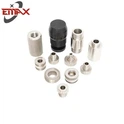
Hey there! As a supplier of 90 Degree Steel Lugs, I often get asked about the difference between these specialized lugs and regular steel lugs. So, I thought I'd take a few minutes to break it down for y'all and help you understand which one might be the right fit for your project.


What Are Steel Lugs Anyway?
First off, let's talk a bit about steel lugs in general. Steel lugs are basically small, flat pieces of steel that are used in a whole bunch of different applications. They're super versatile and can be found in everything from construction projects to machinery. You can think of them as the unsung heroes of the hardware world – they might not be the most glamorous part, but they play a crucial role in holding things together.
Regular steel lugs come in all sorts of shapes and sizes. They're usually used to connect two or more components, providing a stable link between them. They can be bolted, welded, or used with other fastening methods, depending on the specific needs of the project. You might find them in Building Supporting Hardware, where they help keep structures sturdy and secure.
Enter the 90 Degree Steel Lug
Now, let's dive into what makes a 90 Degree Steel Lug different. As the name implies, these lugs have a 90-degree angle. This might seem like a small detail, but it actually makes a huge difference in terms of functionality.
One of the main advantages of a 90 Degree Steel Lug is its ability to change the direction of a load or force. In many applications, you need to create a right-angle connection between two components. Regular steel lugs might not be able to do this effectively, but the 90-degree angle of these lugs allows for a seamless and strong connection.
For example, in a suspended ceiling system, Suspended Ceiling Clips U Clamp Secure Holding Straight Hanger often use 90 Degree Steel Lugs. These lugs help to connect the hanger rods to the ceiling grid at a perfect right angle, ensuring that the ceiling is level and stable. Without this precise angle, the ceiling could sag or become uneven over time.
Design and Manufacturing
The design of a 90 Degree Steel Lug is more complex than that of a regular steel lug. To achieve the perfect 90-degree angle, manufacturers need to use specialized tools and techniques. This often involves Stamping Machine Part By Laser Cutting, which allows for precise cuts and a high level of accuracy.
The manufacturing process also requires careful quality control. Since the 90-degree angle is so critical, even a small deviation can affect the performance of the lug. That's why we take extra steps to ensure that each 90 Degree Steel Lug we produce meets the highest standards. We use advanced measuring tools to check the angle and dimensions of every lug before it leaves our facility.
Strength and Durability
Both regular steel lugs and 90 Degree Steel Lugs are made from high-quality steel, which means they're pretty tough. However, the 90-degree design of the specialized lugs can sometimes give them an edge in terms of strength.
The angle of the 90 Degree Steel Lug helps to distribute the load more evenly across the lug and the connected components. This can reduce stress concentrations and prevent premature failure. In applications where there are high loads or repetitive forces, such as in heavy machinery, the 90 Degree Steel Lug might be a better choice.
Of course, the strength and durability of a lug also depend on the type of steel used and the manufacturing process. At our company, we use only the best grade of steel and have strict quality control measures in place to ensure that our lugs can withstand even the toughest conditions.
Cost and Availability
When it comes to cost, 90 Degree Steel Lugs are usually a bit more expensive than regular steel lugs. This is because of the more complex design and manufacturing process. However, the extra cost can often be justified by the added functionality and performance.
In terms of availability, both types of lugs are generally easy to find. However, the specific size and style you need might be more readily available for regular steel lugs. If you're in the market for 90 Degree Steel Lugs, it's a good idea to work with a reliable supplier who can provide you with the right product at the right time.
Which One Should You Choose?
So, how do you decide whether to use a 90 Degree Steel Lug or a regular steel lug for your project? Well, it all comes down to your specific needs.
If you need to create a right-angle connection between two components, or if you're working in an application where load distribution is critical, then a 90 Degree Steel Lug is probably the way to go. On the other hand, if you just need a simple connection between two parts and the angle isn't a big deal, then a regular steel lug might be sufficient.
It's also important to consider the overall design and requirements of your project. You might want to consult with an engineer or a professional in the field to get their advice on which type of lug is best for your situation.
Contact Us for Your 90 Degree Steel Lug Needs
If you're interested in purchasing 90 Degree Steel Lugs for your project, I'd love to hear from you. We're a leading supplier of high-quality 90 Degree Steel Lugs, and we're committed to providing our customers with the best products and service. Whether you need a small quantity for a DIY project or a large order for a commercial job, we can help. Just reach out to us, and we'll be happy to discuss your requirements and provide you with a competitive quote.
References
- General knowledge about steel lugs from industry experience
- Information on suspended ceiling systems from relevant construction manuals