


Hey there! As a stamping parts supplier, I've dealt with all sorts of metals for stamping. And let me tell you, the differences between stamping parts made of different metals are pretty significant. In this blog, I'm gonna break down these differences and give you a better understanding of what each metal brings to the table.
Aluminum Stamping Parts
First up, aluminum. Aluminum is a popular choice for stamping parts, and it's easy to see why. It's lightweight, which is a huge advantage in industries where weight is a concern, like automotive and aerospace. You can check out our Aluminum Stamping And Sheet Metal Components for some great examples.
One of the key benefits of aluminum stamping parts is their corrosion resistance. Aluminum forms a natural oxide layer on its surface, which protects it from rust and other forms of corrosion. This makes it ideal for outdoor applications or environments where the parts will be exposed to moisture.
Aluminum is also highly malleable, which means it can be easily formed into complex shapes during the stamping process. This allows for greater design flexibility, and you can create parts with intricate details and precise dimensions.
However, aluminum does have some drawbacks. It's not as strong as some other metals, like steel. So, if you need parts that can withstand high stress or heavy loads, aluminum might not be the best choice. Also, aluminum can be more expensive than other metals, especially if you're using high - grade alloys.
Steel Stamping Parts
Steel is another common metal used in stamping. It's known for its strength and durability, which makes it suitable for a wide range of applications. Our High Quality Steel Buckle With Zinc Plating is a great example of a steel stamping part.
Steel stamping parts can handle high loads and stresses without deforming. This makes them perfect for use in machinery, construction, and automotive components. They can also be heat - treated to further enhance their strength and hardness.
One of the advantages of steel is its cost - effectiveness. It's generally more affordable than aluminum, especially when you're producing large quantities of parts. Steel is also widely available, which means you can source it easily and quickly.
But steel isn't without its problems. It's prone to corrosion, especially in wet or humid environments. To combat this, steel parts often need to be coated or plated, like the zinc plating on our steel buckle. This adds to the production cost and time. Steel is also heavier than aluminum, which can be a disadvantage in applications where weight is a factor.

Zinc - based Stamping Parts
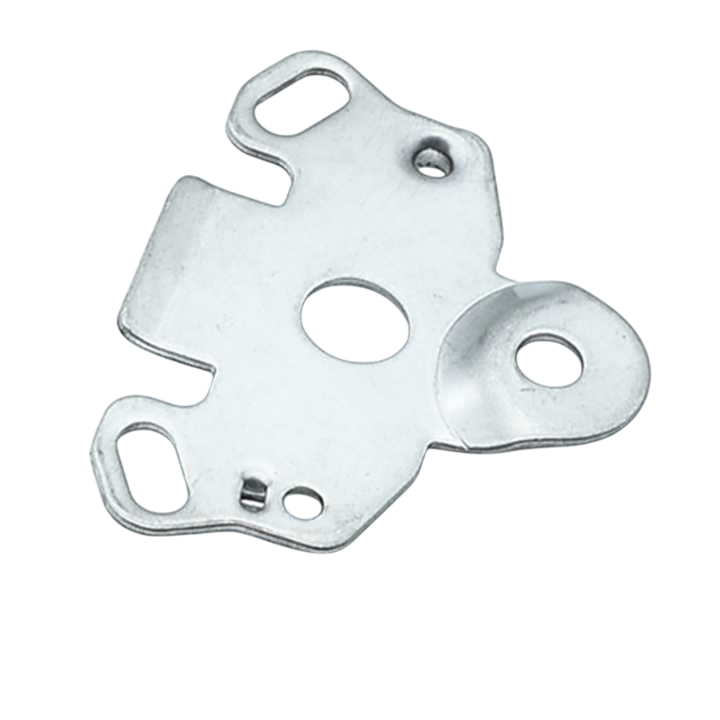
Zinc is a unique metal when it comes to stamping. Our Custom Made Metal Fabrication Zinc&yellow Chromate Stamping Parts showcase the properties of zinc in stamping.
Zinc has excellent corrosion resistance, even better than some forms of steel. It forms a protective layer on its surface that prevents rust and other forms of corrosion. This makes zinc stamping parts ideal for use in outdoor or harsh environments.
Zinc is also relatively easy to stamp. It has good fluidity during the stamping process, which allows for the creation of parts with smooth surfaces and fine details. Zinc parts can be used in a variety of industries, including electronics, hardware, and automotive.
However, zinc is not as strong as steel. It has lower tensile strength and may not be suitable for applications that require high - strength parts. Also, zinc parts may be more brittle than parts made from other metals, which means they can be more prone to cracking under certain conditions.
Copper and Brass Stamping Parts
Copper and brass are also used in stamping, although not as commonly as aluminum and steel. Copper is known for its excellent electrical conductivity, which makes it ideal for use in electrical and electronic components. Brass, which is an alloy of copper and zinc, has a nice combination of properties.
Brass is corrosion - resistant, has good strength, and is relatively easy to machine and stamp. It also has an attractive golden color, which makes it popular for decorative applications.
But copper and brass can be more expensive than other metals. And they may require special handling during the stamping process to avoid issues like cracking or deformation.
Comparing the Manufacturing Processes
The manufacturing process for stamping parts can vary depending on the metal. For aluminum, the stamping process usually requires lower force compared to steel because of its lower strength and higher malleability. This means that the stamping equipment may not need to be as powerful, which can save on energy costs.
Steel stamping often requires higher tonnage presses to form the parts correctly. Heat treatment may also be involved after stamping to achieve the desired strength and hardness. This adds an extra step to the manufacturing process and increases the overall production time.
Zinc stamping is generally easier and faster because of its good fluidity. The stamping dies can produce parts with high precision, and the cycle time can be relatively short.
Application - Specific Considerations
When choosing the right metal for stamping parts, you need to consider the specific application. If you're making parts for a lightweight aircraft component, aluminum would be a top choice because of its low weight. On the other hand, if you're producing parts for a heavy - duty construction machine, steel would be more appropriate due to its high strength.
For parts that will be exposed to the elements, like outdoor furniture or automotive exterior components, the corrosion resistance of aluminum, zinc, or properly coated steel is crucial.
In the electronics industry, copper and brass may be preferred for their electrical conductivity and corrosion resistance.
Conclusion
In conclusion, the choice of metal for stamping parts depends on a variety of factors, including the required strength, weight, corrosion resistance, cost, and the specific application. Each metal has its own unique set of advantages and disadvantages.
As a stamping parts supplier, I'm here to help you make the right choice. Whether you need aluminum, steel, zinc, or other metal stamping parts, I can provide high - quality products that meet your requirements.
If you're interested in purchasing stamping parts or have any questions about the different metals and their applications, feel free to reach out. Let's start a conversation and see how we can work together to get you the best stamping parts for your needs.
References
- Metals Handbook: Properties and Selection: Nonferrous Alloys and Pure Metals, ASM International
- Manufacturing Engineering and Technology, S. Kalpakjian and S. Schmid


