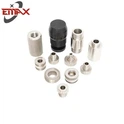
As a supplier of 304 stamping parts, I understand the critical importance of corrosion prevention in maintaining the quality and longevity of these products. 304 stainless steel is a widely used material in stamping parts due to its excellent corrosion resistance, formability, and strength. However, in certain environments, additional protection may be required to ensure optimal performance. In this blog, I will discuss some of the most effective corrosion - prevention coatings for 304 stamping parts.
Understanding the Corrosion Risks of 304 Stamping Parts
Although 304 stainless steel contains chromium, which forms a passive oxide layer on the surface to resist corrosion, it is not immune to all forms of corrosion. Factors such as exposure to harsh chemicals, high humidity, saltwater, and extreme temperatures can compromise the integrity of this passive layer. For example, in marine environments, the high salt content in the air and water can cause pitting corrosion on the surface of 304 stamping parts. In industrial settings, exposure to acidic or alkaline substances may lead to general corrosion.


Common Corrosion - Prevention Coatings for 304 Stamping Parts
1. Zinc Plating
Zinc plating is a popular choice for corrosion prevention in 304 stamping parts. It involves depositing a layer of zinc onto the surface of the part through an electroplating process. Zinc acts as a sacrificial anode, meaning that it will corrode preferentially to the underlying 304 stainless steel. This provides an extra layer of protection, especially in environments where the stainless steel's natural corrosion - resistance may be insufficient.
The benefits of zinc plating include its relatively low cost, good adhesion to the substrate, and the ability to provide uniform coverage. It can also enhance the aesthetic appearance of the stamping parts. If you are interested in stamping parts with zinc plating, you can check out our Stamping Parts Steel Buckle With Zinc Plating.
2. Epoxy Coatings
Epoxy coatings are another effective option for protecting 304 stamping parts from corrosion. These coatings are known for their excellent chemical resistance, adhesion, and durability. Epoxy coatings form a tough, protective film on the surface of the part, which acts as a barrier against moisture, chemicals, and other corrosive agents.
There are different types of epoxy coatings available, such as solvent - based and water - based. Solvent - based epoxy coatings typically offer higher chemical resistance but may have environmental and health concerns due to the presence of volatile organic compounds (VOCs). Water - based epoxy coatings are more environmentally friendly and have lower VOC emissions.
3. Powder Coatings
Powder coatings are a dry finishing process that involves applying a fine powder to the surface of the 304 stamping parts. The powder is electrostatically charged, which allows it to adhere to the part. After application, the part is heated, causing the powder to melt and flow into a smooth, continuous coating.
Powder coatings offer several advantages for corrosion prevention. They provide a thick, durable coating that is resistant to chipping, scratching, and abrasion. They also have good chemical resistance and can be formulated to meet specific requirements, such as UV resistance for outdoor applications. Additionally, powder coatings are environmentally friendly as they produce little to no VOC emissions during the application process.
4. PTFE (Polytetrafluoroethylene) Coatings
PTFE coatings, commonly known as Teflon coatings, are well - known for their non - stick properties. However, they also offer excellent corrosion resistance. PTFE has a low surface energy, which makes it resistant to the adhesion of water, oils, and other substances. This helps to prevent the formation of corrosive agents on the surface of the 304 stamping parts.
PTFE coatings are particularly suitable for applications where low friction and chemical resistance are required, such as in food processing equipment or medical devices. They can withstand a wide range of temperatures and are resistant to many chemicals, including acids and bases.
Factors to Consider When Choosing a Corrosion - Prevention Coating
1. Environmental Conditions
The first factor to consider is the environment in which the 304 stamping parts will be used. If the parts will be exposed to high humidity, saltwater, or harsh chemicals, a more robust coating such as epoxy or powder coating may be required. For less severe environments, zinc plating or a thin PTFE coating may be sufficient.
2. Cost
Cost is always an important consideration in any manufacturing process. Zinc plating is generally the most cost - effective option, followed by powder coatings. Epoxy coatings and PTFE coatings tend to be more expensive due to the materials and application processes involved. However, the long - term benefits of these coatings, such as reduced maintenance and longer service life, may justify the higher initial cost.
3. Aesthetic Requirements
In some cases, the aesthetic appearance of the stamping parts may be important. Zinc plating can provide a shiny, metallic finish, while powder coatings and epoxy coatings can be available in a wide range of colors. PTFE coatings typically have a smooth, white or gray appearance.
4. Application Process
The application process of the coating can also affect the choice. Some coatings, such as powder coatings, require specialized equipment for application. Others, like zinc plating, can be done using standard electroplating facilities. Consider the capabilities of your manufacturing process and the availability of the necessary equipment when choosing a coating.
Our Product Offerings
As a 304 stamping parts supplier, we offer a wide range of products with different corrosion - prevention coatings. For example, our Flat Head Semi - hollow Brass Rivets can be coated with zinc plating or powder coatings to enhance their corrosion resistance. Our Versatile Metallic Clevis For Machinery can also be protected with epoxy or PTFE coatings depending on the specific application requirements.
Conclusion
Corrosion prevention is crucial for the performance and longevity of 304 stamping parts. By choosing the right corrosion - prevention coating, you can ensure that your parts are protected from the damaging effects of corrosion in various environments. Whether you need a cost - effective solution like zinc plating or a high - performance coating like PTFE, there is an option available to meet your needs.
If you are interested in our 304 stamping parts and would like to discuss your specific requirements, please feel free to contact us for procurement and negotiation. We are committed to providing high - quality products and excellent customer service.
References
- ASM Handbook Volume 13A: Corrosion: Fundamentals, Testing, and Protection. ASM International.
- Corrosion Basics: An Introduction. National Association of Corrosion Engineers (NACE).
- Powder Coating Technology Handbook. Society of Manufacturing Engineers.