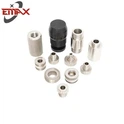
In the world of industrial manufacturing and machinery, copper spare parts are highly valued for their excellent electrical conductivity, thermal conductivity, corrosion resistance, and malleability. However, with the increasing demand for copper products, the market has also been flooded with counterfeit or low - quality copper spare parts. As a reputable copper spare parts supplier, I understand the importance of helping our customers accurately identify genuine copper spare parts. In this blog, I will share some effective methods to distinguish real copper from fakes.
1. Visual Inspection
Color and Texture
Genuine copper has a distinct reddish - brown color. When you first look at a copper spare part, its color should be relatively uniform. New copper parts usually have a bright, shiny appearance. Over time, copper may develop a patina, which is a greenish - blue layer that forms due to oxidation. This patina is a natural characteristic of copper and can actually protect the metal from further corrosion.
In contrast, fake copper parts may have an inconsistent color. They could be too bright or too dull, and the color may not match the typical hue of copper. Some counterfeiters may paint a non - copper base metal to mimic the color of copper, and you may notice signs of peeling paint or an uneven color distribution.
The texture of genuine copper is smooth and homogeneous. You can run your fingers over the surface of the spare part. If it feels rough, bumpy, or has a grainy texture that seems abnormal, it could be a sign of a fake. For example, if a supposed copper part has a lot of small pits or blemishes that are not due to normal wear and tear, it might not be made of pure copper.


Markings and Labels
Many genuine copper spare parts come with markings or labels indicating their origin, grade, and specifications. These markings are usually engraved or stamped clearly on the part. For instance, there may be a logo of the manufacturer, a part number, or information about the copper alloy used.
When examining a spare part, check for these markings carefully. If the markings are faded, smudged, or look like they have been added in a hasty or unprofessional way, it could be a red flag. Counterfeiters may try to copy these markings, but they often do a poor job, and the details may not be accurate.
2. Physical Tests
Density Test
Copper has a relatively high density. You can perform a simple density test to check if a spare part is made of copper. First, measure the mass of the part using a scale. Then, measure its volume. You can do this by submerging the part in a graduated cylinder filled with water and measuring the increase in the water level.
The density of pure copper is approximately 8.96 g/cm³. Calculate the density of the spare part using the formula: density = mass/volume. If the calculated density is significantly different from the known density of copper, it is likely that the part is not made of pure copper. However, keep in mind that some copper alloys may have slightly different densities, so you need to consider the specific alloy used if possible.
Magnet Test
Copper is a non - magnetic metal. Take a strong magnet and bring it close to the copper spare part. If the part is attracted to the magnet, it is almost certainly not made of pure copper. Some counterfeiters may use iron or steel as a base metal and coat it with a thin layer of copper. The magnetic test can quickly identify these types of fakes.
However, be aware that some copper alloys may contain small amounts of magnetic elements, but the magnetic attraction should be very weak. If the part is strongly attracted to the magnet, it is a clear indication of a non - copper or low - quality copper product.
3. Chemical Tests
Acid Test
The acid test is a more advanced method to identify copper. You can use a small amount of dilute hydrochloric acid. First, make sure to perform this test in a well - ventilated area and wear appropriate protective gear such as gloves and goggles.
Take a small, inconspicuous area of the spare part and apply a drop of the dilute hydrochloric acid. If the part is made of copper, a chemical reaction will occur, and you may see bubbles forming. The reaction is due to the copper reacting with the acid to form copper chloride and hydrogen gas.
After the test, rinse the part thoroughly with water to remove any remaining acid. However, this test should be used with caution as it can damage the surface of the part. Also, some copper alloys may react differently to the acid, so it is best to have some knowledge of the specific alloy before performing this test.
4. Comparison with Known Samples
If you have access to known genuine copper spare parts, you can compare the part in question with these samples. Look at the color, texture, size, and shape. You can also compare the weight if possible. Any significant differences in these aspects may indicate that the part is a fake.
For example, if you have a genuine copper bolt and you are trying to determine if another bolt is real copper, compare their lengths, diameters, and the smoothness of the threads. If one bolt has a much rougher thread or a different shape than the known genuine sample, it is likely a counterfeit.
5. Supplier Reputation
As a copper spare parts supplier, I know that the reputation of the supplier is crucial. When purchasing copper spare parts, always choose a reliable and well - established supplier. A trustworthy supplier will have a good track record of providing high - quality products. They will also be able to provide certificates of authenticity, quality control reports, and other relevant documentation for their products.
Before making a purchase, do some research on the supplier. Check online reviews, ask for references from other customers, and see if they are members of any industry associations. A supplier with a good reputation is more likely to sell genuine copper spare parts.
In addition to copper spare parts, we also offer a wide range of other high - quality products. For example, we have Stainless Steel 314 Or 316 Electronic Components that are widely used in the electronics industry. These components are made of high - grade stainless steel, ensuring excellent performance and durability.
We also provide Customized Brass Stamping Hardware For Industrial Use. Our brass stamping hardware is customized according to the specific requirements of our customers, and it is suitable for various industrial applications.
Another product we offer is Automotive Machinery Parts Alloy Sheet Metal Stamping. These parts are made of high - quality alloy sheet metal, which can meet the high - precision and high - strength requirements of the automotive industry.
If you are interested in our copper spare parts or any of our other products, please feel free to contact us for more information and to discuss your procurement needs. We are committed to providing you with the best products and services.
References
- ASM Handbook: Properties and Selection: Nonferrous Alloys and Special - Purpose Materials. ASM International.
- Metals Handbook Desk Edition, 3rd Edition. ASM International.
- Copper Development Association. Technical information on copper and copper alloys.