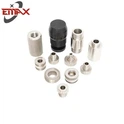
As a seasoned stamping parts supplier, ensuring the concentricity of stamping parts with holes is a critical aspect of our manufacturing process. Concentricity refers to the degree to which the centerlines of two or more features, such as holes, are aligned. In stamping parts, maintaining high concentricity is essential for the proper functioning of the parts, especially in applications where precision is paramount. This blog post will delve into the various methods and strategies we employ to ensure the concentricity of stamping parts with holes.
Understanding the Importance of Concentricity
Before we explore the techniques for ensuring concentricity, it's important to understand why it matters. In many applications, such as automotive and aerospace, stamping parts with holes are used in assemblies where precise alignment is crucial. For example, in an engine block, the holes for the pistons must be perfectly concentric to ensure smooth operation and prevent premature wear. Similarly, in electronic devices, the holes for connectors and components need to be concentric to ensure proper electrical connections.
Poor concentricity can lead to a range of issues, including increased friction, reduced performance, and even component failure. Therefore, ensuring the concentricity of stamping parts with holes is not only important for the quality of the parts but also for the overall reliability and safety of the end products.
Design Considerations
The first step in ensuring the concentricity of stamping parts with holes is to consider the design of the parts. Here are some key design considerations:
- Symmetry: Design the parts to be as symmetrical as possible. Symmetry helps to distribute the forces evenly during the stamping process, reducing the likelihood of distortion and misalignment.
- Hole Placement: Place the holes in the parts in a way that minimizes the distance between them and the center of the part. This helps to reduce the leverage effect and improve the concentricity.
- Hole Size and Tolerance: Specify the appropriate hole size and tolerance based on the application requirements. A smaller hole size and tighter tolerance generally result in better concentricity.
- Material Selection: Choose the right material for the stamping parts. The material should have good formability and dimensional stability to ensure accurate stamping and hole punching.
Tooling Design and Maintenance
The design and maintenance of the stamping tools play a crucial role in ensuring the concentricity of stamping parts with holes. Here are some important aspects to consider:
- Precision Tooling: Use high-precision tooling to ensure accurate stamping and hole punching. The tooling should be designed and manufactured to tight tolerances to minimize any variations in the hole size and position.
- Tool Alignment: Ensure that the stamping tools are properly aligned before each stamping operation. Misaligned tools can cause the holes to be punched off-center, resulting in poor concentricity.
- Tool Maintenance: Regularly maintain the stamping tools to keep them in good condition. This includes cleaning, lubricating, and inspecting the tools for any signs of wear or damage. Replace any worn or damaged tool components promptly to ensure consistent performance.
Stamping Process Control
Controlling the stamping process is essential for ensuring the concentricity of stamping parts with holes. Here are some key process control measures:
- Press Setup: Set up the stamping press correctly, including adjusting the stroke length, pressure, and speed. The press should be operated within the recommended parameters to ensure consistent stamping quality.
- Feed System: Use a reliable feed system to ensure accurate positioning of the material during the stamping process. The feed system should be able to feed the material smoothly and precisely, minimizing any movement or misalignment.
- Quality Control Checks: Implement a comprehensive quality control system to monitor the concentricity of the stamping parts with holes. This can include in-process inspections using measuring tools such as calipers, micrometers, and coordinate measuring machines (CMMs).
- Process Optimization: Continuously optimize the stamping process based on the quality control results. Make adjustments to the tooling, press setup, or feed system as needed to improve the concentricity of the parts.
Inspection and Measurement
Inspection and measurement are crucial steps in ensuring the concentricity of stamping parts with holes. Here are some common inspection and measurement methods:
- Visual Inspection: Conduct a visual inspection of the stamping parts to check for any obvious signs of misalignment or distortion. This can help to identify any major issues early on.
- Dimensional Measurement: Use measuring tools such as calipers, micrometers, and CMMs to measure the hole size, position, and concentricity of the stamping parts. Compare the measured values with the specified tolerances to ensure compliance.
- Statistical Process Control (SPC): Implement SPC techniques to monitor the process stability and detect any trends or variations in the concentricity of the stamping parts. This helps to identify and address any potential issues before they result in defective parts.
Advanced Technologies and Solutions
In addition to the traditional methods and techniques, there are also some advanced technologies and solutions that can help to improve the concentricity of stamping parts with holes. Here are some examples:


- Laser Cutting: Laser cutting can be used to create precise holes in stamping parts with high accuracy and repeatability. Laser cutting also offers the advantage of minimal heat-affected zone, reducing the risk of distortion and misalignment. Check out our Metal Plate With Laser Cutting Service Aluminum for more information.
- CNC Machining: CNC machining can be used to perform secondary operations on the stamping parts, such as reaming or boring, to improve the concentricity of the holes. CNC machining offers high precision and flexibility, allowing for custom machining solutions.
- Automated Inspection Systems: Automated inspection systems, such as vision systems and laser scanners, can be used to quickly and accurately measure the concentricity of stamping parts with holes. These systems can provide real-time feedback and help to improve the quality control process.
Conclusion
Ensuring the concentricity of stamping parts with holes is a complex but essential task in the stamping industry. By considering the design of the parts, the tooling design and maintenance, the stamping process control, and the inspection and measurement methods, we can effectively improve the concentricity of the stamping parts and ensure the quality of the end products.
As a Stamping Automotive Parts supplier, we are committed to providing our customers with high-quality stamping parts that meet their exacting requirements. We continuously invest in the latest technologies and equipment to improve our manufacturing processes and ensure the precision and reliability of our products.
If you are looking for a reliable stamping parts supplier for your Multifunctional Aluminum Alloy Household Folding Ladder or other applications, please feel free to contact us. We would be happy to discuss your specific needs and provide you with a customized solution.
References
- Smith, J. (2018). Precision Stamping: Techniques and Applications. New York: Wiley.
- Brown, A. (2019). Tooling Design for Stamping Operations. London: Elsevier.
- Johnson, R. (2020). Quality Control in Stamping Manufacturing. Chicago: ASQ Quality Press.