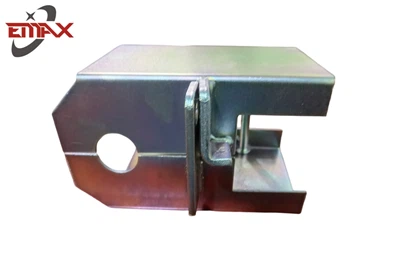
Products Description
It is the process through which Perforated Metal Galvanized Angle Steel Fabrications are cut out and fashioned into various shapes and sizes. One of the common uses of metal stamping in industries is that involving the manufacture of punched and stamped angles, very essential in agricultural machinery and industrial machinery.
Perforated Metal Galvanized Angle Steel Fabrications are made of galvanized steel, aluminum, and other types of materials that can resist corrosion and rust. Agricultural uses include farm machinery, like the framework for tractors and combine harvesters.
Punched and stamped angles are produced by using a press that is able to punch holes and shape the angle accordingly to the desired specifications. After treatment, the product is subjected to a protective coating against rust and corrosion.
Besides the Perforated Metal Galvanized Angle Steel Fabrication,ion has made such other parts and components for agricultural machinery: bearings, springs, gears, sprockets, to name only a few.
Among the many advantages of metal stamping is that it can produce high volumes of parts with great speed and efficiency. In view of that, the process is very suitable for such productions as agricultural machinery components and industrial machinery, which are largely quantity-based.
In general, stamping metal plays an important role in agricultural machinery production for making strong and reliable parts critical to the operability of equipment. Given that it can produce huge amounts of parts in a relatively short period, the metal stamping process is cost-effective and highly efficient, continuing to serve a critical role within this industry.
Specification
Weight: Customized
Color: self-color,black,electroplating ,painted/customized
Applicable Industries: Auto, Building, Capital equipment and etc
Material: Stainless steel/aluminum alloy/copper/iron/zinc
Delivery time: 30-45 days
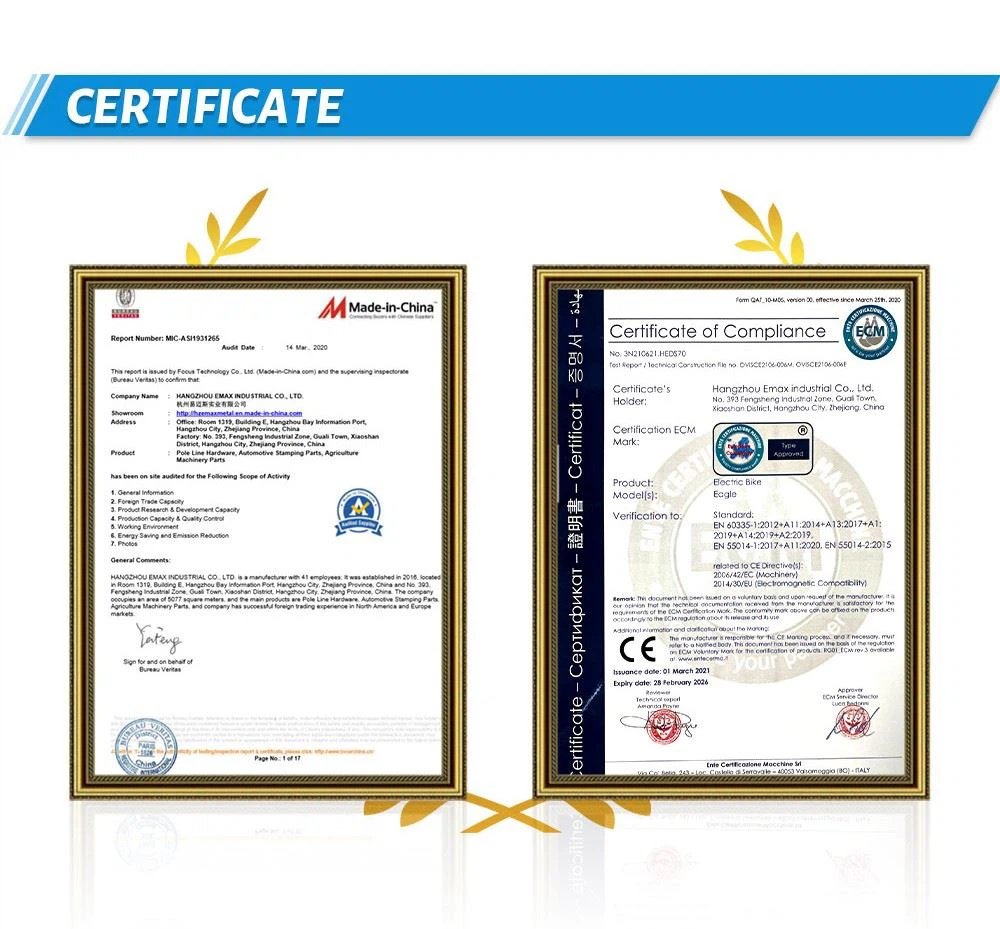
Certificate: ISO9001
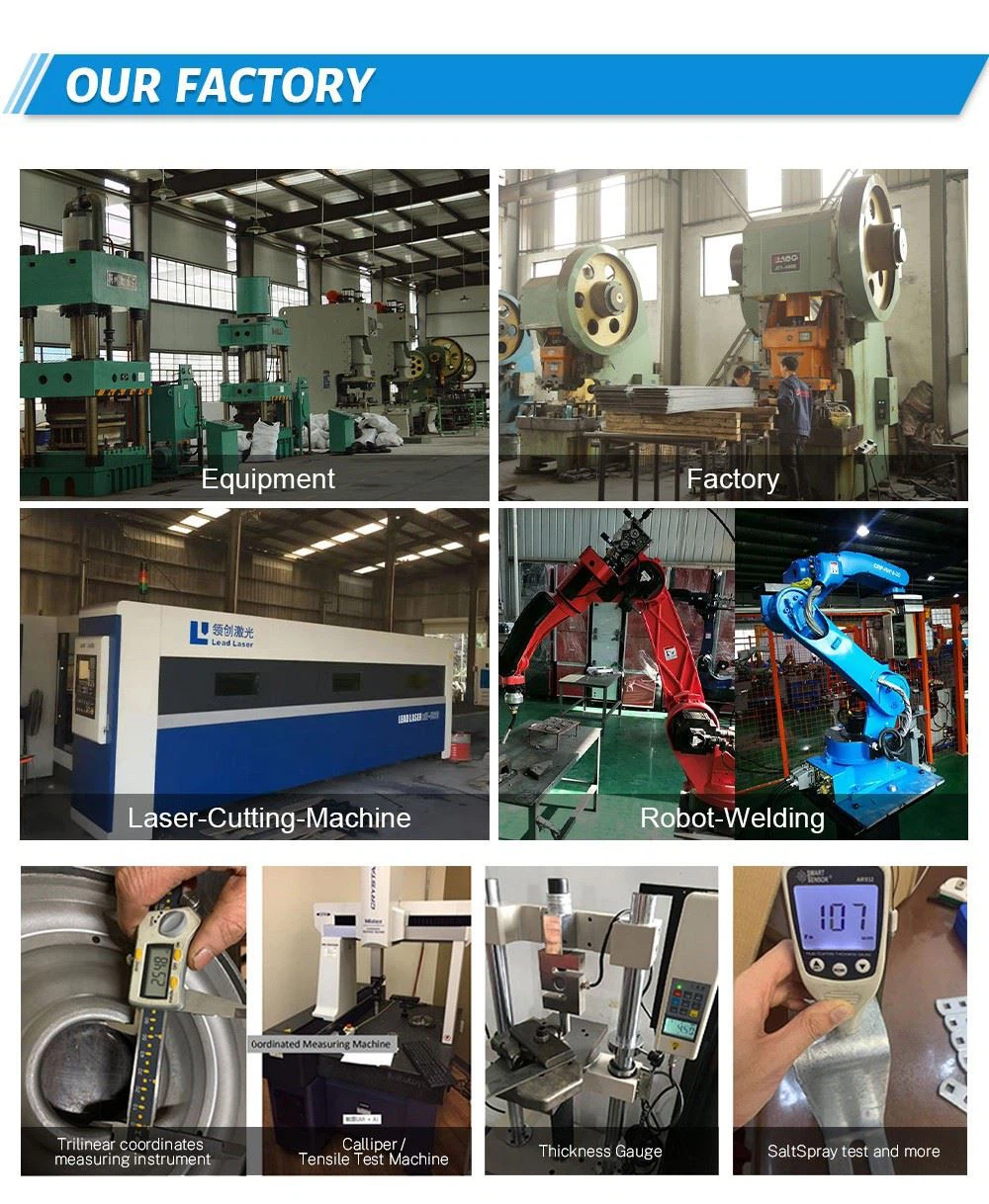
Enclosure Details
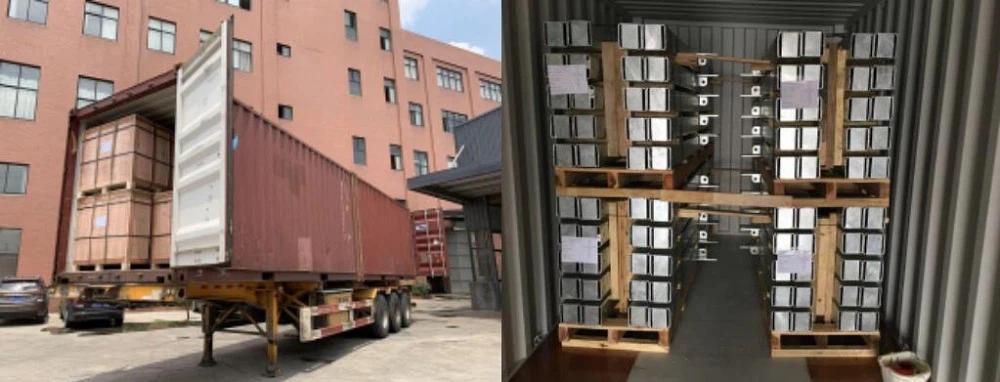
Package & Delivery:

Products Description
What is Sheet Metal Forming?
Sheet Metal Forming is an umbrella term that covers a number of different subtractive and non-subtractive sheet metal fabrication processes, including:
- Punching
- Bending
- Hemming
- Ironing
- Laser Cutting
- Hydroforming
What is CNC Cutting in Metal Fabrication?
CNC cutting is also known as "die cutting". These processes do not produce "chips" of material, but rather change the shape of a workpiece (usually a large piece of sheet metal) through precise, clean "cuts".
What are the types of CNC cutting?
The main types of CNC cutting processes include punching and blanking (both of which are also considered CNC stamping processes), fiber laser cutting, CO2 laser cutting, water jet cutting, and plasma cutting.
What is CNC punching?
The CNC punching process is a metal stamping process that uses an automated "punch" to create holes or other clean shapes in sheet metal. The punch contains "tools" of various shapes and sizes that "punch" various shapes, such as holes, into the metal at very high speeds. This produces very small scrap metal. CNC turret punch presses can be combined with an automatic tool changer (ATC) to significantly increase efficiency, including reduced setup time and unattended operation.
What is CNC blanking?
CNC blanking has similarities to punching. The blanking tool still punches precise shapes out of the metal sheet, however, the part that is punched out of the metal is not scrap; instead, it is typically a component that is retained and either used alone or combined with other components to assemble a more complex part or product. Once the part is punched out, the remaining sheet metal is discarded.
What are fiber laser and CO2 laser cutting in metal fabrication?
Laser cutting is typically performed through an automated process that uses a fiber or CO2 laser with a high-speed cutting head. These lasers create ultra-sharp, uniform cuts in sheet metal to shape to customer specifications. CO2 lasers are generally less efficient than fiber lasers and require more energy to operate. Because fiber laser beams do not reflect, fiber lasers can cut almost any metal more safely and easily than CO2 lasers. As a result, it is more easily absorbed by the material, allowing for the precise cuts required for most metal fabrication projects.
What is water jet cutting?
Water jet cutting uses a supersonic stream of water (sometimes mixed with an abrasive) to cut various shapes or patterns into a metal workpiece. The water pressure is so great that it can almost instantly erode the metal into the desired shape. Water jet cutting is well suited for cutting thick metals; however, it is not as precise as laser cutting, which works better when working within tight tolerances, especially those required for most precision sheet metal fabrication projects.
What is plasma cutting?
Plasma cutting is a type of thermal cutting. It uses high-velocity ionized gas to create a superheated plasma stream that is capable of cutting any conductive material, including a variety of metals. While plasma cutting is very useful for cutting thicker materials, it generally does not provide the same quality when cutting thinner metals, such as sheet metal, and is less energy efficient and environmentally friendly than fiber lasers.
What is CNC stamping and pressing in metal fabrication?
CNC stamping covers a variety of metal manufacturing processes, including punching, blanking, embossing, coining, flanging, and bending. Some of these processes are subtractive, which means that metal is removed from the workpiece. Other processes are non-subtractive, which means that high pressure is used to press a design into the metal or to form a precise bend without removing any material from the sheet metal.
What is CNC sheet metal bending?
CNC bending is the most common type of metal forming and is performed by automated bending machines. Some parts require only a simple single bend, which means that the shape of the metal is changed at only one axis point, forming a V, U, or groove shape. Additional bending operations on the same workpiece can form more complex parts. CNC bending can be performed manually or by automated bending robots.
What is sheet metal embossing?
Embossing is the use of pressure to form a precise concave or convex pattern or texture on a sheet metal workpiece, either by pressing a die against a stationary sheet metal part or by moving the metal over a roller die. It is a non-subtractive process.
What is Sheet Metal Flanging?
Coining is a basic type of sheet metal bending and another non-subtractive stamping process. Coining essentially involves "squeezing" the metal between two closed dies to form the desired shape.
Contact Us
Address: No.393 Fengsheng Industrial Zone, Guali Town, Xiaoshan, Hangzhou, China.
Email: Nurul@emaxmetal.com
Tel: +86-571-83737375
https://www.emaxindustrial.com
Hot Tags: Perforated Metal Galvanized Angle Steel Fabrication, China, suppliers, manufacturers, factory, customized, buy, price, bulk, for sale, Black Powder Coating Steel Parts, Electrical Powder Coating Box, Powder Coating Dustpan, , Cultivator Spare Parts, One Hole Clamp